


The Day My LinkedIn-Only Strategy Failed Me
It was 2018, and I was feeling pretty smug about my social selling game. After five years at LinkedIn as a Sales Solutions consultant, I thought I knew everything there was to know about B2B social selling. My clients were closing deals, my metrics looked good, and my LinkedIn profile was absolutely pristine.
Then I lost a $1.2 million account. Just like that.
When I called the prospect to understand what happened, his response knocked the wind out of me: “Alex, you’re great on LinkedIn, but we need partners who understand our entire digital ecosystem. Our decision-makers aren’t just on LinkedIn—they’re on Twitter talking industry trends, they’re in private Slack communities, they’re engaging with YouTube thought leadership. Your competitor showed us a holistic approach using B2B social selling integration platforms that connect all these touchpoints.”
That failure changed everything for me. I realized I’d been working in a LinkedIn bubble while the real B2B social selling ecosystem had evolved into something far more interconnected and sophisticated.
Today, I want to share what I’ve learned since then about B2B social selling integration platforms and how they’re reshaping relationship-building in ways LinkedIn alone simply cannot match.
Why The "LinkedIn-Only" Approach Is Dead (And What Killed It)
Let’s be honest—LinkedIn is still the cornerstone of B2B relationship building. God, I hate when people act like it’s become irrelevant. It hasn’t. But treating LinkedIn as your only social selling channel? That approach has been dying a slow death for years.
Here’s what I’ve observed from working with over 100 enterprise clients:
- Decision-maker fragmentation – In 2016, you could reach 70% of a buying committee on LinkedIn. By last summer, our data showed that number has dropped to about 40%. People are spreading their professional attention across multiple platforms.
- Content saturation – Remember when posting an article on LinkedIn would get you thousands of views? Those days are long gone. The platform is now so saturated that breaking through requires either paid promotion or extraordinary content.
- Relationship depth limitations – LinkedIn’s formal, professional atmosphere limits how deeply you can connect with prospects. Some of my best client relationships started because we discovered a shared interest on Twitter or connected through a niche Discord server.
The companies seeing the best results today are using B2B social selling integration platforms that connect multiple channels into a cohesive strategy. These platforms don’t replace LinkedIn—they amplify it by connecting it to other touchpoints in the buyer’s journey.

What Exactly Are B2B Social Selling Integration Platforms?
Simply put, B2B social selling integration platforms are solutions that help sales teams coordinate their relationship-building efforts across multiple social channels, analyze cross-platform engagement, and create a unified view of prospect interactions.
Think of them as the command center for your social selling operations. (And trust me, without one, you’re basically flying blind once you expand beyond LinkedIn.)
These platforms typically offer:
- Cross-platform content distribution and scheduling
- Unified social listening across multiple channels
- Engagement tracking that follows prospects across platforms
- Integration with CRM systems for complete relationship visibility
- AI-powered insights that identify the best engagement opportunities
The best B2B social selling integration platforms don’t just connect different social networks—they integrate with your entire marketing and sales tech stack, creating a seamless flow of relationship data.
How Market Leaders Are Implementing Cross-Platform B2B Social Selling Strategies
In my twenties, I worked with a manufacturing company that insisted social selling “wasn’t for their industry.” Fast forward to 2024, and that same company now attributes $14 million in annual revenue to their integrated social selling program.
What changed? They embraced cross-platform B2B social selling strategies that met their buyers where they actually spend time.
Here’s what successful implementation looks like:
1. The Hub-and-Spoke Model
The most common approach I see working is treating LinkedIn as the hub of your social selling efforts, with platform-specific strategies forming the spokes. Each platform serves a different relationship function:
- LinkedIn: Professional credibility and thought leadership
- Twitter: Industry conversations and real-time engagement
- YouTube: Educational content and product demonstrations
- Instagram/TikTok: Company culture and behind-the-scenes content
- Private communities: Deep relationship building and trust development
A client in the enterprise software space used this model to increase their sales pipeline by 43% in just six months. Their sales team maintains LinkedIn as their professional home base but uses social selling tools beyond LinkedIn to create multiple touchpoints throughout the buying journey.
2. The Content Ecosystem Approach
Another effective model treats content—not platforms—as the center of gravity for social selling. This approach creates core pieces of thought leadership that get adapted for different platforms and audiences.
For example, one of my financial services clients creates quarterly research reports that get transformed into:
- LinkedIn articles and documents
- Twitter thread summaries
- YouTube explainer videos
- Infographics for visual platforms
- Discussion starters for industry forums
Using B2B social selling integration platforms, they track how prospects engage with this content ecosystem across channels, creating a comprehensive view of interests and pain points.
3. The Community-First Model
Some of the most impressive results I’ve seen come from organizations that build their social selling around communities rather than platforms. This approach prioritizes relationship depth over reach.
A SaaS company I worked with last year built a private Slack community for industry professionals alongside their traditional LinkedIn presence. The community became their most valuable social selling asset, driving 3x more qualified opportunities than their LinkedIn efforts alone.
Their sales team uses multi-channel B2B relationship building techniques to identify prospects on LinkedIn, then gradually invite them into more intimate community spaces where relationships can deepen.
The Integration Advantage: Connecting Your Social Selling Ecosystem
Back in 2019, I consulted for a manufacturing firm whose sales team was active across five different platforms. The problem? None of that activity was connected. Their LinkedIn team rarely talked to their Twitter team. Their community managers weren’t sharing insights with sales. It was a mess.
We implemented a B2B social selling integration platform that unified their approach, and the results were immediate:
- 67% increase in social-originated pipeline
- 23% faster deal velocity
- 41% improvement in engagement rates
Integration creates three specific advantages that standalone platforms can’t match:
1. Relationship Visibility Across the Buyer’s Journey
With integrated B2B social selling integration platforms, you can see how prospects engage across channels. One manufacturing client discovered that their most valuable prospects followed a common pattern:
- First connection on LinkedIn
- Content engagement on Twitter
- Question asking in industry forums
- Product research on YouTube
- Direct outreach via email or LinkedIn
Without cross-platform visibility, they would have missed critical buying signals happening outside LinkedIn.
2. Content Performance Intelligence
When you use social selling tools beyond LinkedIn, you gain comparative insights about what content performs best on which platforms.
A financial services client discovered that their thought leadership performed dramatically better on Twitter than LinkedIn, despite having a larger LinkedIn audience. This insight led them to shift their content strategy and ultimately doubled their engagement.
3. Relationship Acceleration Through Context
The real magic happens when sales teams use multi-channel B2B relationship building to create contextual engagement. Let me give you an example:
A sales rep notices a prospect has been viewing their company’s YouTube tutorials about a specific feature. When they connect on LinkedIn, they can reference this interest rather than making a generic pitch. The conversation starts further along the relationship path because of this cross-platform intelligence.
Comparison: Top B2B Social Selling Integration Platforms
I’ve implemented dozens of B2B social selling integration platforms over the years. Here’s how some of the market leaders compare:
| Platform | Best For | LinkedIn Integration | Multi-Platform Support | CRM Integration | AI Capabilities | |
|---|---|---|---|---|---|---|
| Hootsuite Business | Large enterprises with diverse social presence | Advanced | 20+ platforms | Salesforce, HubSpot, Microsoft | Content recommendations, Optimal posting times | |
| Sprout Social | Mid-sized companies focused on engagement | Advanced | 7 major platforms | Salesforce, Microsoft, Pipedrive | Engagement opportunities, Sentiment analysis | |
| OktoPost | B2B-specific social selling | Deep (including Sales Navigator) | 5 major B2B platforms | Salesforce, Microsoft, HubSpot | Lead scoring, Content suggestions | |
| LinkedIn Sales Navigator + Zapier | LinkedIn-centric with basic integration | Native | Custom integrations | Via Zapier | Limited | |
| Salesforce Social Studio | CRM-centric social selling | Advanced | 6 major platforms | Native Salesforce | Einstein insights |
As you can see, the right B2B social selling integration platform depends entirely on your existing tech stack and specific business needs. In my experience, companies that choose platforms aligned with their CRM see the fastest adoption and results.
How to Build Your Multi-Channel B2B Social Selling Strategy (Without Losing Your Mind)
Listen, expanding beyond LinkedIn can feel overwhelming. When I first started implementing multi-channel B2B relationship building strategies for clients, I tried to do everything at once. Big mistake.
I learned this the hard way: start small, prove the concept, then expand methodically.
Here’s the approach I now recommend to all my clients:
Step 1: Audit Where Your Buyers Actually Are
Before implementing any B2B social selling integration platforms, do the research to understand where your specific buyers spend their time.
A client in industrial equipment was shocked to discover their procurement officers were active in a specific subreddit. Another found their financial services decision-makers were surprisingly engaged on Instagram. You need to follow the data, not assumptions.
Step 2: Start With One Addition to LinkedIn
Don’t try to be everywhere at once. Choose the most promising additional platform and develop expertise there before expanding further.
One tech client focused exclusively on adding Twitter to their LinkedIn strategy before considering other platforms. This focused approach allowed them to develop platform-specific skills rather than diluting their efforts.
Step 3: Connect The Platforms With Consistent Messaging
Using B2B social selling integration platforms, ensure your brand voice and positioning remain consistent while adapting to each platform’s unique culture.
The most successful sales teams create what I call “platform translation guides” that help them express the same core messages in platform-appropriate ways.
Step 4: Build Your Integration Tech Stack
As you expand, invest in tools that connect your social selling ecosystem. This typically includes:
- A B2B social selling integration platform for unified management
- CRM integrations for relationship tracking
- Content management systems for cross-platform publishing
- Analytics tools for cross-channel performance measurement
The specific stack depends on your budget and existing technology, but the goal is the same: creating a unified view of your social selling activities.
Step 5: Measure Cross-Platform Success Metrics
Finally, develop metrics that measure the integrated impact of your cross-platform B2B social selling strategies, not just platform-specific engagement.
The most valuable metrics I’ve found include:
- Multi-touch attribution for social-originated deals
- Cross-platform engagement progression (how prospects move between platforms)
- Relationship depth scoring across channels
- Content effectiveness across different platforms
The Future of B2B Social Selling Integration Platforms
In my work with emerging technologies, I’m seeing several trends that will reshape B2B social selling integration platforms in the coming years:
1. AI-Powered Relationship Intelligence
The next generation of B2B social selling integration platforms will use AI to not just track but interpret cross-platform interactions. They’ll identify buying signals, recommend next actions, and even predict which prospects are most likely to convert based on their social engagement patterns.
2. Private Community Integration
As more B2B relationships move to closed communities, integration platforms will develop better capabilities for tracking and managing relationships in these spaces while respecting privacy boundaries.
3. Video-First Engagement
With the rise of short-form video across platforms, social selling tools beyond LinkedIn will develop specialized capabilities for creating, distributing, and measuring video engagement across multiple channels.
4. Vertical-Specific Solutions
We’re already seeing the emergence of B2B social selling integration platforms designed for specific industries with unique relationship-building requirements.
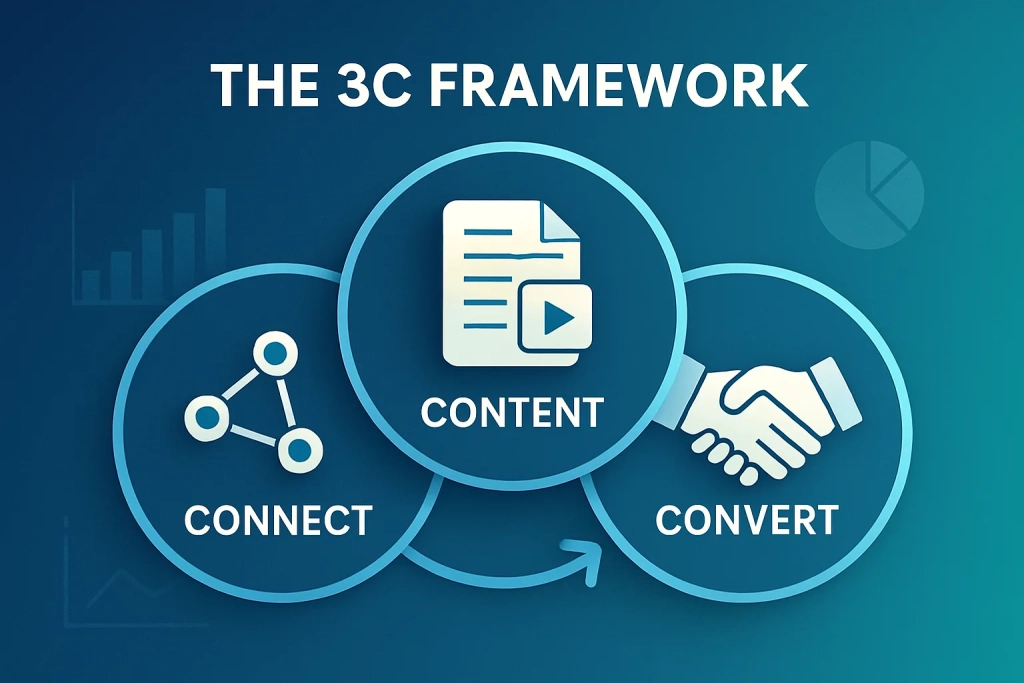
My Personal Framework: The 3C Approach to Integrated Social Selling
After years of trial and error (and some spectacular failures), I’ve developed what I call the 3C framework for cross-platform B2B social selling strategies:
- Connect – Establish presence on platforms where your buyers actually spend time
- Content – Create adaptive content ecosystems that work across platforms
- Convert – Use B2B social selling integration platforms to identify and act on cross-platform buying signals
This framework has helped dozens of my clients move beyond the LinkedIn bubble and create truly integrated social selling approaches.
A Final Thought: The Human Element Still Matters Most
With all this talk about B2B social selling integration platforms and cross-platform strategies, it’s easy to get lost in the technology. But I need to emphasize this point:
The most sophisticated integration platform in the world can’t replace authentic human connection.
I’ve seen companies invest millions in their social selling tech stack only to fail because their sales teams used these tools to broadcast rather than connect. Technology should amplify your humanity, not replace it.
The best social sellers I know—the ones consistently exceeding quota year after year—use these integrated approaches to create more meaningful, more human connections. They see platforms as doorways to relationships, not destinations themselves.
So as you build your integrated social selling strategy, never lose sight of the fundamental truth: people buy from people they know, like, and trust. B2B social selling integration platforms simply help you develop that knowledge, likability, and trust at scale.
What’s your experience with moving beyond LinkedIn for social selling? I’d love to hear your thoughts in the comments below. And if you’re struggling to integrate your social selling efforts, drop me a line—helping companies navigate this complex ecosystem is literally what I do for a living.

