


Remember when we thought simply collecting customer data was the hard part? Those were simpler times. After 15 years in the trenches of data analytics—from managing enterprise data platforms at Nielsen to helping Fortune 500 companies reinvent their customer experiences—I’ve learned that the real challenge isn’t gathering data. It’s activating it effectively.
I still recall sitting in a boardroom in 2019, watching executives high-five over their shiny new CDP implementation. “We’ve got all this first-party data now,” they said. “The results will pour in!” Six months later, they were still running the same basic demographic segments they’d used for years. All that investment, and they were barely scratching the surface.
That’s the truth about first-party data activation strategy that nobody wants to admit: most companies are doing it wrong. They’re stuck in what I call “segmentation kindergarten” when they should be graduating to advanced contextual targeting.
Today, I’ll share how to move beyond basic segmentation and implement a truly transformative first-party data activation strategy that delivers results. No more data collection for data’s sake. No more lazy targeting. Just powerful, context-aware customer experiences that convert.
Why Your Current First-Party Data Activation Strategy Isn't Working
Let’s be honest. Most “data-driven” marketing isn’t all that sophisticated. Many brands loudly proclaim they’re leveraging first-party data, but when you peek behind the curtain, you’ll find rudimentary segments like:
- Female customers, ages 25-34
- Customers who purchased in the last 30 days
- Email subscribers who clicked on last week’s promotion
Trust me, I’ve sat through countless strategy meetings where these basic segments were presented as groundbreaking insights. Eye roll.
The problem isn’t usually the technology—it’s our approach to first-party data activation strategy. We treat segmentation as the end goal rather than the starting point. We isolate data points instead of creating a contextual understanding of customer behavior.
What Does Advanced Contextual Targeting Actually Look Like?
When I first started working with contextual targeting with first-party data, I made the mistake of thinking it just meant adding a few more variables to my segmentation model. God, I hate when I remember how simplistic my thinking was!
True contextual targeting requires a multi-dimensional approach that considers:
- Customer intent signals
- Environmental context
- Behavioral patterns
- Cross-channel engagement history
- Real-time situational factors
One of my clients—a major retail chain—was struggling with cart abandonment. Their solution? Blast everyone who abandoned with the same generic email. Classic beginner move.
We implemented a contextual targeting framework that considered:
- Which product categories they viewed (intent)
- Time of day they browsed (environmental context)
- Previous purchase history (behavioral patterns)
- How they arrived at the site (engagement history)
- Current weather in their location (situational context)
The results were staggering—a 34% increase in recovery rate simply by adding contextual intelligence to their first-party data activation strategy.
How to Build Advanced Customer Segmentation Frameworks That Actually Work
Last summer, I worked with a financial services company that was frustrated with their conversion rates. “We’ve segmented our audience into 12 personas,” their CMO told me. “But we’re still not seeing results.”
When I examined their segmentation framework, I immediately spotted the issue: they were using static, demographic-based personas without any contextual intelligence.
Here’s how we rebuilt their advanced customer segmentation frameworks:
Step 1: Start with behavioral signals, not demographics
Demographics are comfortable because they’re simple, but they’re terrible predictors of actual behavior. Instead, start with what customers actually do:
- Content consumption patterns
- Feature usage frequency
- Path to purchase
- Response to previous messaging
One client of mine refused to believe that demographics weren’t the answer—until we tested behavioral segmentation against demographic segmentation. The behavioral model outperformed by 3x. Numbers don’t lie.
Step 2: Add contextual layers to create “moment-based” targeting
Once you have behavioral foundations, layer in contextual elements:
- Time context (time of day, day of week, season)
- Location context (geography, urban/suburban, current location)
- Device context (mobile vs. desktop, app vs. web)
- Progression context (where in the customer journey)
I remember implementing this approach for an ecommerce client who saw their conversion rates double simply by adjusting message timing based on previous purchase behavior. Sometimes the simplest contextual adjustments yield the biggest results.
Step 3: Implement real-time decisioning capabilities
This is where your first-party data activation strategy really starts to shine. Static segments updated weekly aren’t enough anymore. You need:
- Real-time signal processing
- Dynamic audience qualification
- Automated decision trees
- Instant experience personalization
I worked with a travel company that struggled with booking abandonment. By implementing real-time decisioning that adjusted offers based on browsing behavior, search history, and seasonal factors, they increased bookings by 22%. That’s the power of contextual activation.
Why Real-Time Data Activation Techniques Are No Longer Optional
In my twenties, I thought batch processing was fine for most marketing purposes. (Trust me, I learned this the hard way.) Today’s consumer expects immediacy and relevance that batch processing simply cannot deliver.
Modern real-time data activation techniques should include:
Behavioral Trigger Systems That Respond Instantly
Remember when “triggered emails” meant someone got a message 24 hours after abandoning a cart? That’s not real-time—that’s practically prehistoric in today’s environment.
True real-time activation means responding within seconds to customer signals. A friend of mine who leads marketing at a major DTC brand implemented a system that delivers personalized offers within 8 seconds of abandonment signals. Their recovery rate increased by 47%.
Cross-Channel Orchestration That Maintains Context
Have you ever seen an ad for a product you just purchased? Of course you have. We all have. It’s the clearest sign of a broken first-party data activation strategy.
Real cross-channel orchestration maintains contextual awareness across touchpoints. When a customer converts in one channel, that information should immediately update their targeting profile everywhere else.
One healthcare client I worked with saw a 28% increase in program enrollment by ensuring their email, SMS, and paid media systems could communicate in real-time. No more awkward messaging disconnects.
The Contextual Targeting Matrix: A Framework for Implementation
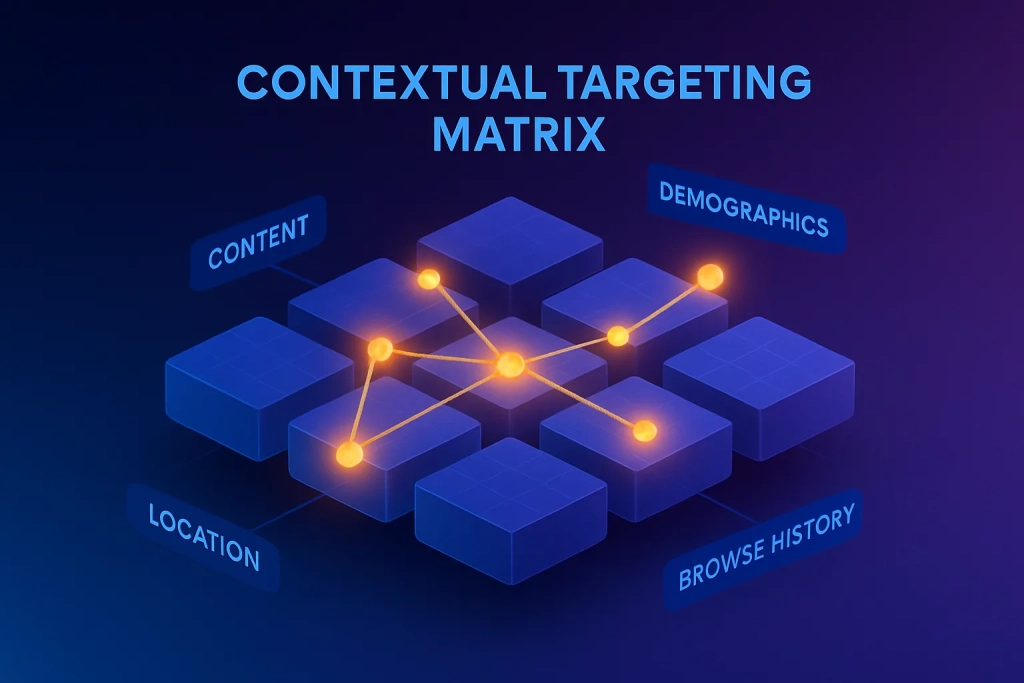
Throughout my consulting work, I’ve developed what I call the Contextual Targeting Matrix—a framework for implementing contextual targeting with first-party data. Here’s how it works:
| Context Dimension | Basic Targeting | Intermediate Targeting | Advanced Targeting |
|---|---|---|---|
| Time Context | Day-part targeting | Behavioral time patterns | Predictive time optimization |
| Location Context | Geo-targeting | Locational relevance | Geographic behavior patterns |
| Device Context | Device-specific experiences | Cross-device journey optimization | Predictive device preferences |
| Behavioral Context | Recent actions | Behavioral patterns | Predictive intent modeling |
| Personal Context | Demographic targeting | Preference-based personalization | Life-stage journey mapping |
This matrix helps my clients visualize where their first-party data activation strategy currently sits and where they need to go next. Most organizations I work with are shocked to find they’re still in the “basic” column for most dimensions.
A media company I consulted for discovered they were advanced in behavioral targeting but completely basic in time and location context. By balancing their approach, they saw engagement rates increase by 34% in just three months.
Common Pitfalls in Implementing Your First-Party Data Activation Strategy
Let me share some hard-earned wisdom from the trenches. Here are the mistakes I see companies make over and over again when trying to implement advanced customer segmentation frameworks:
1. Over-engineering your segments
A telecommunications client once proudly showed me their segmentation model with 64 distinct customer segments. I asked how many they were actually using for targeting. The answer? Three. All that complexity was essentially useless.
Keep your framework flexible and focused on actionability. Can you actually deliver meaningfully different experiences to each segment? If not, you’re over-engineered.
2. Under-investing in data integration
You cannot execute real-time data activation techniques without proper integration. Period. I’ve seen companies invest millions in fancy CDPs and AI tools only to discover their data isn’t integrated enough to use them effectively.
Before you invest in activation technology, ensure your data streams are clean, connected, and accessible.
3. Focusing on channels instead of journeys
One retail client had separate teams managing each channel, each with their own segmentation approach. The result? Completely disjointed customer experiences.
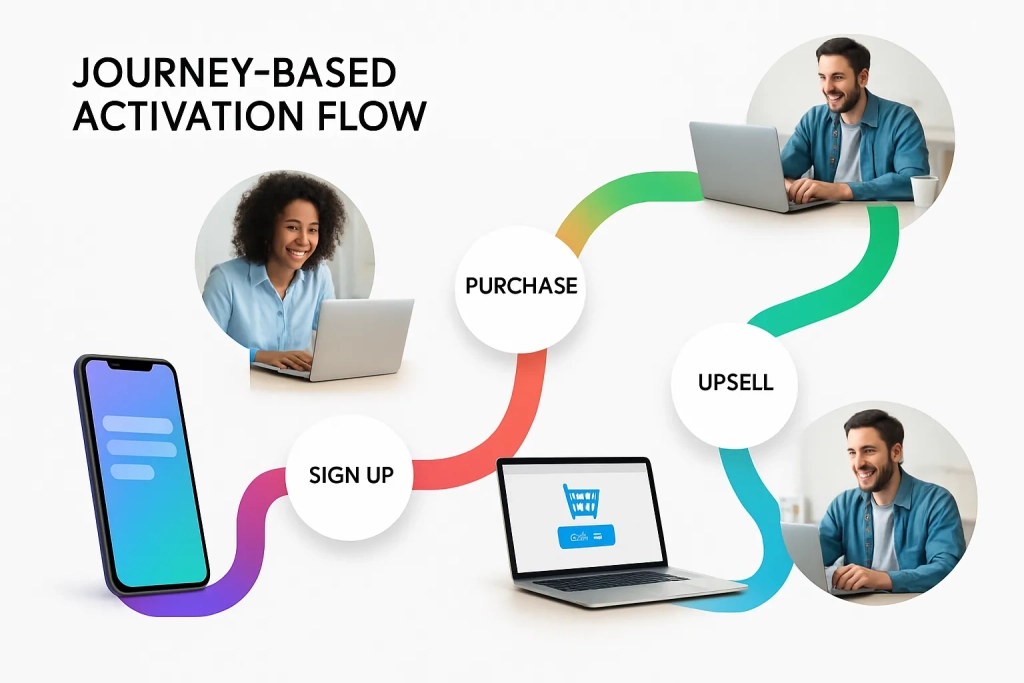
Your first-party data activation strategy must be journey-centric, not channel-centric. The same contextual intelligence should inform every touchpoint.
How to Get Started With Advanced Contextual Targeting Today
You don’t need to overhaul your entire marketing stack overnight to start improving your first-party data activation strategy. Here’s my recommended approach:
Begin with one high-value customer journey
Pick a single customer journey with clear business value—perhaps your acquisition flow or retention program. Apply contextual targeting principles to just that journey first. This creates a proving ground for your approach.
A financial services client of mine started with just their credit card application journey. By applying contextual targeting to this single flow, they generated an additional $3.2M in revenue in the first quarter.
Audit your current data activation capabilities
Most organizations already have tools that enable more advanced targeting than they’re currently using. Audit your martech stack with a focus on:
- What real-time data streams are available?
- What contextual signals can you currently access?
- Where are the gaps in your activation capabilities?
You’d be surprised how much you can accomplish with existing technology if you approach it differently.
Create a simple contextual targeting pilot
Start small with a test that introduces just one new contextual element to your targeting approach. For instance:
- Add time-of-day optimization to your email sends
- Incorporate weather data into your promotional strategy
- Use browse behavior to adjust product recommendations
A hospitality client of mine added just one contextual element—recent browsing history—to their email program and saw a 17% lift in bookings. Sometimes the simplest changes drive the biggest results.
The Future of First-Party Data Activation Strategy
Looking ahead, I see several key developments that will reshape first-party data activation strategy in the coming years:
AI-driven contextual intelligence
Machine learning will increasingly interpret contextual signals automatically, creating ever more sophisticated understanding of the “why” behind customer actions. This will move us beyond rules-based systems to truly intelligent activation.
Predictive contextual modeling
Rather than just responding to current context, advanced systems will predict future contextual states. Imagine targeting based not just on where a customer is now, but where they’re likely to be (physically and mentally) in the near future.
Ethical contextual boundaries
As contextual targeting with first-party data becomes more sophisticated, brands will need to establish clear ethical boundaries. Just because you can use a contextual signal doesn’t mean you should. Trust will become the limiting factor, not technology.
Conclusion: The Contextual Imperative
As privacy regulations tighten and third-party cookies disappear, your first-party data activation strategy isn’t just a marketing concern—it’s a business survival imperative.
Those who master contextual activation will create experiences that feel magical to customers: anticipatory, helpful, and non-intrusive. Those who don’t will find themselves increasingly irrelevant, broadcasting generic messages to increasingly annoyed customers.
The tools and techniques I’ve shared today aren’t theoretical—they’re battle-tested approaches I’ve implemented with dozens of brands across industries. They work. But they require a fundamental shift in how we think about data activation.
So ask yourself: Is your organization still stuck in segmentation kindergarten? Or are you ready to graduate to the advanced class of contextual targeting?
The choice is yours. But from where I sit, after 15 years in this industry, the direction is clear. Contextual is the future of first-party data activation strategy. And the future is already here.
FAQ About First-Party Data Activation Strategy
What’s the difference between segmentation and contextual targeting?
Segmentation typically groups customers based on static attributes (demographics, past purchases), while contextual targeting incorporates dynamic variables like time, location, device, and real-time behavior. Effective first-party data activation strategy uses segmentation as a foundation but adds contextual intelligence for more relevant experiences.
Do I need a CDP to implement advanced contextual targeting?
While a Customer Data Platform can certainly help, it’s not absolutely required. Many organizations can implement aspects of contextual targeting with first-party data using their existing marketing technology stack with proper integration. Start with the strategy and customer experience goals, then determine what technology you need.
How do privacy regulations impact contextual targeting?
Privacy regulations like GDPR and CCPA actually make contextual targeting more important, not less. As third-party cookies disappear, first-party data activation strategy becomes essential. The key is ensuring proper consent management and transparency in how you use customer data for targeting.
What organizational structure best supports advanced data activation?
The most successful implementations I’ve seen have cross-functional teams where data scientists, marketers, and customer experience professionals work collaboratively. Breaking down silos between these groups is essential for effective real-time data activation techniques.
How do I measure the success of contextual targeting initiatives?
Look beyond traditional marketing metrics to measure true incremental impact. A/B test your contextual approaches against traditional segmentation to demonstrate lift. Focus on metrics like conversion rate improvement, customer lifetime value increase, and reduction in marketing waste.
How frequently should we update our contextual targeting models?
Unlike traditional segments that might be refreshed monthly or quarterly, contextual models should be continuously learning and improving. At minimum, review performance monthly and make adjustments, but ideally, implement systems that can optimize in real-time based on performance data.

