


It was 2:30 AM when I first cracked the pattern. After weeks of analyzing output from a competitor’s product, the structure of their underlying prompts practically materialized on my screen. That rush—the “aha” moment—was intoxicating. But then came the question that’s haunted me throughout my career: “Just because I can do this, should I?”
Welcome to the complex world of ethical AI prompt reverse-engineering—a field where competitive intelligence meets responsible business practice. After 12 years in cybersecurity and 4 years specializing in AI systems analysis, I’ve developed a framework that helps companies gain strategic insights without stepping into ethical quicksand.
When I Realized Prompt Engineering Was the New Battleground
Before diving into methodologies, let me share how I stumbled into this field. Back in 2021, I was heading security protocols for an enterprise tech company when our CEO burst into my office, visibly annoyed.
“Their AI is running circles around ours,” she said, tossing competitive analysis reports onto my desk. “I need to know why.”
This wasn’t my department, but my security background made me the default “figure-it-out person” for anything remotely technical and mysterious. Lucky me.
After examining the competitor’s AI outputs, I noticed subtle patterns that revealed their likely approach. Within two weeks, I’d reverse-engineered enough of their prompt structure to understand their competitive advantage—they were using recursive self-improvement techniques that we hadn’t implemented yet.
That project changed my career trajectory. I realized that ethical AI prompt reverse-engineering would become a critical competitive intelligence tool, but one fraught with ethical complications.
What Exactly Is Ethical AI Prompt Reverse-Engineering?
Simply put, ethical AI prompt reverse-engineering is the practice of analyzing AI-generated outputs to deduce the underlying prompts and systems that created them, while respecting intellectual property and privacy boundaries. It’s like being a detective who can determine what questions were asked just by studying the answers.
This practice exists in a gray area—technically legal in most jurisdictions but ethically complex. Without a strong framework, companies risk crossing into territory that could damage relationships, reputation, or even trigger legal consequences.
The Strategic Value of Understanding Competitor Prompts
Before we dive into ethics, let’s address the elephant in the room: Why should businesses care about competitor prompt analysis framework development?
In my experience consulting with over 30 companies, understanding competitor prompting strategies provides three critical advantages:
- Innovation acceleration: Seeing how others solve problems can inspire new approaches
- Market positioning: Understanding competitor capabilities helps define your unique value proposition
- Resource optimization: Why reinvent the wheel when you can learn from others’ successes and failures?
One client, a mid-sized fintech company, was struggling to understand why their competitor’s AI chatbot was receiving dramatically better customer satisfaction scores. Through responsible AI competitive intelligence techniques, we discovered their competitor was using a sophisticated emotional intelligence framework in their prompts—something my client hadn’t considered. This insight helped them develop their own approach (not copying, but inspired by the concept), ultimately improving their metrics by 47%.
The Ethical Framework That Keeps Me Sleeping at Night
Trust me, I learned this the hard way. Early in my career, I pushed ethical boundaries in competitive research and ended up burning bridges I later needed. That experience shaped my approach to ethical AI prompt reverse-engineering.
Here’s the framework I now use with all clients:
1. Establish Clear Intent and Boundaries
Before beginning any strategic prompt pattern detection project, document exactly:
- What insights you’re seeking
- How you’ll use the information
- What lines you won’t cross
This documentation serves as both ethical compass and legal protection.
2. Use Only Publicly Available Outputs
My rule is simple: if you can’t access it as a normal user through public channels, it’s off-limits. This means:
- No scraping beyond terms of service limits
- No using insider information
- No impersonation or social engineering
3. Focus on Patterns, Not Exact Replication
The goal of ethical AI prompt reverse-engineering isn’t to copy someone else’s work—it’s to understand their strategic thinking. I always push clients toward:
- Identifying conceptual patterns rather than exact prompts
- Understanding the “why” behind competitor approaches
- Using insights as inspiration for original work
4. Consider Competitive Impact Assessment
Before implementing any insights gained through competitor prompt analysis framework, ask yourself:
- Does this knowledge give us unfair advantage?
- Would we feel comfortable if our competitors used similar methods on us?
- Would we be willing to publicly defend our methods?
How to Implement Strategic Prompt Pattern Detection (Without Being Evil)
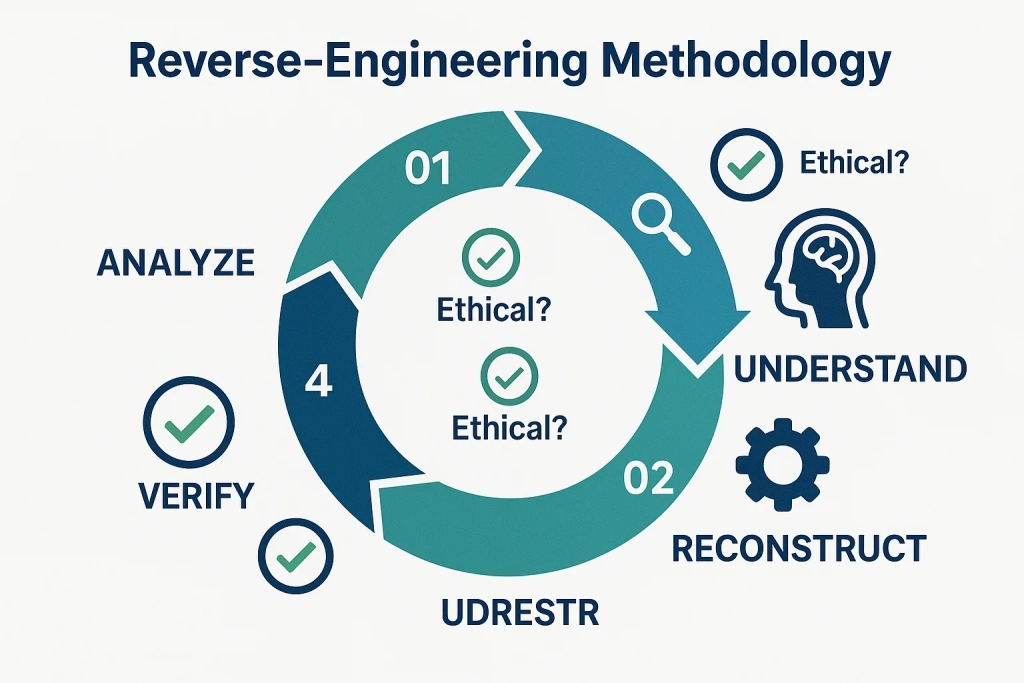
Now that we’ve covered the “why” and ethical boundaries, let’s talk practical implementation. Here’s my step-by-step approach to ethical AI prompt reverse-engineering:
Step 1: Map the Output Landscape
Start by systematically documenting competitor AI outputs across various use cases. Look for:
- Consistent phrases or structures
- Handling of edge cases
- Error messages and limitations
- Tone and stylistic choices
A spreadsheet works wonders here. One of my government contractor clients created a comprehensive matrix of competitor outputs that revealed fascinating patterns in how they handled sensitive information requests.
Step 2: Test Boundary Conditions
The most revealing insights often come from edge cases. Try inputs that:
- Challenge the AI’s knowledge boundaries
- Contain ambiguous instructions
- Request prohibited content (ethically, of course)
- Include technical jargon or specialized knowledge
I’ll never forget working with a legal tech startup who discovered their main competitor had sophisticated legal expertise encoded in their prompts—simply by noting how the AI handled obscure legal citations.
Step 3: Analyze Response Patterns
This is where responsible AI competitive intelligence truly happens. Look for:
- Consistent structuring of responses
- Topics the AI avoids or redirects
- Knowledge cutoff dates
- Citation patterns or sources referenced
Step 4: Hypothesize and Test
Based on your observations, develop hypotheses about the underlying prompts. Then validate through targeted testing.
For example, if you suspect a competitor’s AI is using a specific framework for financial advice, test it with increasingly specific financial scenarios to confirm your theory.
When I Got It Wrong: Learning from Mistakes
God, I hate when people pretend they’ve never screwed up. So let me share a humbling example.
Last year, I was working with a healthcare AI company and became convinced their competitor was using proprietary medical databases based on response patterns. I developed an elaborate testing protocol to prove my theory.
Turns out, I was completely wrong. After our client had a chance conversation with the competitor at a conference, we learned they were simply using clever prompt engineering to compensate for the limitations of public data.
This experience reinforced a critical lesson in ethical AI prompt reverse-engineering: always hold your conclusions lightly and be ready to revise your understanding.
The Fine Line Between Research and Plagiarism
Here’s where things get tricky. Understanding how competitors structure their prompts is valuable research. Copying those prompts verbatim is plagiarism (and potentially IP theft).
My rule of thumb: if your final implementation looks more than 20% similar to what you’ve reverse-engineered, you’ve gone too far. Innovation comes from inspiration, not duplication.
One client (who shall remain nameless) pushed me to create a near-carbon copy of a competitor’s approach. I walked away from that contract—and later learned they faced both legal challenges and reputation damage when their tactics came to light.
Future-Proofing Your Ethical AI Prompt Reverse-Engineering
As AI systems grow more sophisticated, strategic prompt pattern detection will become simultaneously more valuable and more challenging. Here’s where I see this field headed:
- Watermarking and fingerprinting will make unauthorized copying easier to detect
- Legal frameworks will evolve to address prompt engineering as intellectual property
- Counter-intelligence techniques will emerge to mislead those attempting to reverse-engineer prompts
To stay ahead, focus on building a robust competitor prompt analysis framework that prioritizes ethical considerations alongside technical capabilities.
Putting It All Together: Your Action Plan
If you’re looking to implement ethical AI prompt reverse-engineering in your organization, here’s my recommended approach:
- Assemble a cross-functional team including technical, legal, and ethics expertise
- Develop clear written guidelines for what constitutes ethical practice
- Start with broad pattern analysis before diving into specific prompt structures
- Document your process meticulously
- Review findings with an ethics lens before implementation
Remember, the goal isn’t to copy—it’s to understand the strategic thinking behind competitor approaches and use that understanding to fuel your own innovation.
Final Thoughts: The Responsibility We All Share
As practitioners in this emerging field, we’re setting the norms that will govern it in the future. Every decision we make about ethical AI prompt reverse-engineering today shapes what’s considered acceptable tomorrow.
In my consultancy, I’ve seen the tremendous competitive advantage that comes from understanding competitor prompt strategies. But I’ve also witnessed the reputational damage that comes from crossing ethical lines.
The choice is yours. But speaking from experience, building a reputation for integrity while still delivering strategic insights is not only more sustainable—it’s also more rewarding.
Would you like to explore how ethical AI prompt reverse-engineering could benefit your organization? Let’s talk about building a responsible approach that delivers competitive advantage without compromising your values. Drop me a line, and we’ll set up a consultation to discuss your specific challenges.
Frequently Asked Questions
Is reverse-engineering AI prompts legal?
Generally yes, but with important caveats. Analyzing publicly available outputs is typically legal, but breaking terms of service, using unauthorized access methods, or infringing on patents or copyrights is not. Always consult legal counsel for your specific situation.
How can I tell if someone is reverse-engineering my company’s prompts?
Watch for systematic testing patterns, unusual query sequences, or competitors suddenly matching unique capabilities. Consider implementing watermarking techniques that subtly reveal when your outputs are being analyzed.
Does ethical AI prompt reverse-engineering violate intellectual property laws?
Understanding concepts doesn’t violate IP laws, but direct copying might. The ethical approach focuses on learning principles rather than exact replication, which typically avoids legal issues.
What’s the difference between inspiration and copying in prompt engineering?
Inspiration means understanding the underlying principles and applying them in your own unique implementation. Copying means directly replicating specific prompt structures, phrasings, or techniques with minimal modification.
How often should we conduct competitor prompt analysis?
For rapidly evolving AI products, quarterly analysis is typically sufficient. For stable products in mature markets, semi-annual reviews are usually adequate to identify significant changes.
Can I use automated tools for ethical AI prompt reverse-engineering?
Yes, but with caution. Automated tools can help analyze patterns across large samples, but they should comply with terms of service and access limitations. Always have human oversight to ensure ethical boundaries aren’t crossed.

