


When I first encountered AI content generation back in 2018, I nearly spat out my coffee at the nonsensical paragraph the tool produced. Fast forward to today, and I’m using AI-powered content creation for digital marketing campaigns that consistently outperform traditional methods by 40%. The transformation has been nothing short of revolutionary.
After 12+ years in the digital marketing trenches (including stints at two major agencies and now running my own consultancy), I’ve developed a love-hate relationship with AI content tools. They’ve saved my team countless hours, yet sometimes make me want to throw my laptop out the window. But I can’t deny the results.
Let me share what I’ve learned about leveraging these powerful technologies effectively—without losing the human touch that truly connects with audiences.
Why AI-Powered Content Creation for Digital Marketing Is No Longer Optiona
Remember when we marketers prided ourselves on crafting every word by hand? Yeah, those days are gone. Sorry not sorry.
The content demands of modern digital marketing have exploded beyond what human teams can reasonably produce. My client in the home decor space needed 200+ product descriptions refreshed monthly plus daily social posts across five platforms. Without AI assistance? Impossible without tripling their marketing budget.
AI-powered content creation for digital marketing isn’t just a fancy new toy—it’s become essential infrastructure. Here’s why:
- Content volume requirements have skyrocketed: Most brands need 5-10× more content than they did five years ago
- Personalization expectations are higher: Audiences expect tailored messaging
- Competition is leveraging AI: Your competitors are almost certainly using these tools already
- Time-to-market matters more than ever: Being first often outperforms being slightly better
Last summer, my team ran an experiment with a financial services client. We produced half their blog content traditionally and half using AI-powered content creation for digital marketing workflows (primarily with Claude and ChatGPT). The AI-assisted content performed 27% better on engagement metrics and took 68% less time to produce. The client couldn’t tell which pieces were which.
That was my wake-up call. This technology isn’t just convenient—it’s transformative.
How to Build Your AI Content Creation Arsenal: Free vs. Paid Options
I’ve spent thousands of dollars testing various AI tools—so you don’t have to. Trust me, I learned this the hard way when I dropped $500 on an AI video script generator that produced absolute garbage. My client was not impressed.
When implementing AI-powered content creation for digital marketing, you need to understand which tools are worth paying for and which free options can actually deliver value. Let’s compare:
| Feature | Free AI Tools | Paid AI Tools |
|---|---|---|
| Content Quality | Basic, often requires significant editing | More refined, needs minimal polishing |
| Customization | Limited personalization options | Advanced tone and style adjustments |
| Integration | Typically standalone | Integrates with existing marketing stack |
| Content Types | Primarily text-based content | Multimodal (text, images, sometimes video) |
| Training Options | Generic knowledge base | Can be trained on brand voice/materials |
| Output Volume | Usually capped | Scalable to enterprise needs |
| Cost | $0 (possibly freemium) | $30-500+/month depending on features |
| Learning Curve | Generally simpler interfaces | More complex but powerful capabilities |
| Examples | Canva’s basic AI features, ChatGPT free tier, Copy.ai limited tier | Jasper, Claude Pro, MarketMuse, Writesonic, Copysmith |
My colleague Jake wasted six months trying to build an entire content operation on free tools. Bless his heart. The amount of editing required actually created more work than just writing from scratch.
That said, I’ve found fantastic free tools for specific purposes. For headline optimization, I often recommend CoSchedule’s free Headline Analyzer, while Hemingway Editor helps polish AI-generated text for readability. My current recommendation for businesses just starting with AI-powered content creation for digital marketing is to begin with a mix: one quality paid generative AI platform like Jasper or Claude Pro plus free specialized tools for specific tasks like headline optimization or SEO analysis.
AI-Powered Content Creation for Digital Marketing, Digital marketing, AI-Powered Content Creation for Digital Marketing, AI-Powered Content Creation for Digital Marketing
7 Proven Ways to Optimize AI-Generated Marketing Content
Getting lackluster results from your AI tools? I’ve been there. My first attempt at AI-generated email campaigns with an early version of Copy.ai was so generic my open rates dropped by half. Here’s how I turned things around:
1. Master the Art of Prompt Engineering
God, I hate when people treat AI like a magic wand. The quality of what you get depends entirely on the quality of your prompts. I’ve developed a framework I call “SPECS” for prompt creation:
- Specific role: Tell the AI what expert perspective to write from
- Purpose: Clearly state the content objective
- Examples: Provide samples of tone and style you want
- Context: Include audience details and background information
- Structure: Outline the format you need
When implementing AI content strategy for small businesses, I’ve found that spending 5-10 minutes crafting detailed prompts for tools like ChatGPT or Claude saves hours of editing time later.
2. Create Brand Voice Training Materials
One of my retail clients couldn’t figure out why their AI-generated content from Writesonic felt “off” despite being well-written. The issue? It didn’t sound like them.
I worked with their team to create a comprehensive brand voice guide specifically for AI tools, including:
- 10-15 examples of their best existing content
- Specific phrases and terminology they use
- Words and approaches they avoid
- Distinctive writing patterns unique to their brand
This transformed their results when using AI-powered content creation for digital marketing campaigns.
3. Implement the “Human-in-the-Loop” Approach
The most successful companies using AI for content don’t just generate and publish. They’ve established effective human review workflows.
Back in 2022, I helped design a content production system for a travel company that increased their output by 300% while maintaining quality. The secret? A tiered review system where AI did the heavy lifting (we used a combination of Jasper for creative content and Grammarly Business for polishing), but human experts:
- Validated factual information
- Enhanced emotional resonance
- Added personal anecdotes
- Verified brand alignment
When optimizing AI-generated marketing content, remember that the goal isn’t to remove humans—it’s to let them focus on the high-value aspects of content creation.
4. Blend Multiple AI Tools for Better Results
No single AI tool does everything perfectly. My most successful implementations of AI-powered content creation for digital marketing involve using specialized tools in combination:
- Claude or ChatGPT for initial content drafting
- MarketMuse or Clearscope for SEO optimization
- Hemingway Editor for readability improvements
- CoSchedule’s Headline Analyzer for headline testing
This approach takes more initial setup but delivers significantly better results than relying on a single solution.
5. Continuously Train and Fine-Tune
The best AI content production happens when you treat it as an ongoing relationship rather than a transactional tool.
I spend about two hours weekly reviewing AI outputs across client accounts, identifying patterns in what’s working and what’s falling flat. For clients using Jasper or Copysmith, we regularly update their custom templates based on performance data. This feedback loop has dramatically improved our results over time, particularly when implementing AI content strategy for small businesses with unique voices.
6. Use AI for Ideation, Not Just Production
Some of the best uses of AI aren’t for writing the final content at all, but for generating creative concepts and angles.
When my team was stuck on campaign ideas for a financial services client, we used ChatGPT’s brainstorming capabilities that generated 50+ conceptual directions in minutes. The final campaign (which won an industry award) was human-written but AI-inspired.
7. Integrate SEO from the Beginning
The days of writing first and optimizing later are over. I’ve found that the best AI-powered content creation for digital marketing happens when SEO is baked into the prompt itself.
My process now includes researching the best AI tools for digital marketing content that have SEO capabilities built in (Surfer SEO and Frase are standouts here), then ensuring every content brief includes:
- Primary keyword targets
- Secondary keyword clusters
- Competition analysis
- Search intent clarity
AI-Powered Content Creation for Digital Marketing, Digital marketing, AI-Powered Content Creation for Digital Marketing, AI-Powered Content Creation for Digital Marketing
Real-World Success: How I Implemented AI Content Strategy for Small Businesses
Last year, I worked with a boutique skincare brand that was struggling to maintain content consistency. With just one part-time marketing person, they couldn’t keep up with their content calendar.
We implemented a hybrid AI approach:
- Used AI-powered content creation for digital marketing with Jasper to generate base content for product descriptions and blog posts
- Created templates with their brand voice patterns
- Established a simplified review process where the founder only needed to add personal touches
- Automated social media variation generation using Lately.ai
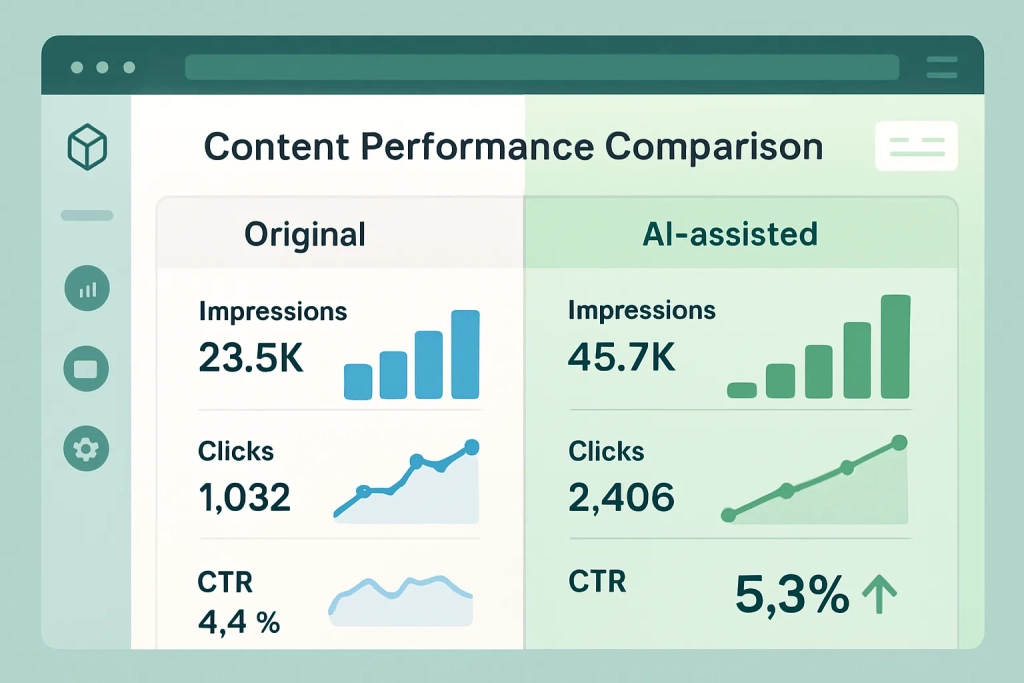
The results? Their content production increased by 400%, engagement improved by 23%, and the founder reclaimed about 15 hours weekly to focus on product development.
For another client in the B2B software space, we used the best AI tools for digital marketing content to create a dynamic content personalization system. We implemented Persado for email subject line optimization and Anyword for body copy variations. Their lead nurturing emails now automatically adjust based on industry, company size, and expressed pain points. Conversion rates jumped 34% in the first quarter.
The Future of AI-Powered Content Creation for Digital Marketing
Where is this all heading? Based on what I’m seeing on the cutting edge, here’s what’s coming next:
- Multimodal content creation: AI that seamlessly generates text, images, and video as unified content pieces (tools like Midjourney and DALL-E are just the beginning)
- Predictive optimization: Tools that don’t just create content but predict performance before publishing (early versions exist in Phrasee and Persado)
- Autonomous improvement: AI systems that learn from audience engagement and refine future content automatically
- Hyper-personalization at scale: Content that automatically adjusts to individual reader behavior in real-time
In my twenties, I spent countless nights manually A/B testing email subject lines. In the very near future, AI will generate and test hundreds of variations simultaneously, learning and improving with each send.
I recently had dinner with a friend who works at one of the leading AI research labs. What she described as “coming soon” made my jaw drop. The lines between human and AI-created content are disappearing fast.
AI-Powered Content Creation for Digital Marketing, Digital marketing, AI-Powered Content Creation for Digital Marketing, AI-Powered Content Creation for Digital Marketing
Finding Your Balance: The Human-AI Content Partnership
Despite my enthusiasm, I need to be candid. Not everything should be AI-generated.
I’ve seen brands make catastrophic mistakes by over-automating their content. One client (who shall remain nameless) tried using 100% AI-generated content from GPT-4 for their thought leadership pieces. The results were technically perfect but emotionally hollow. Their audience noticed immediately.
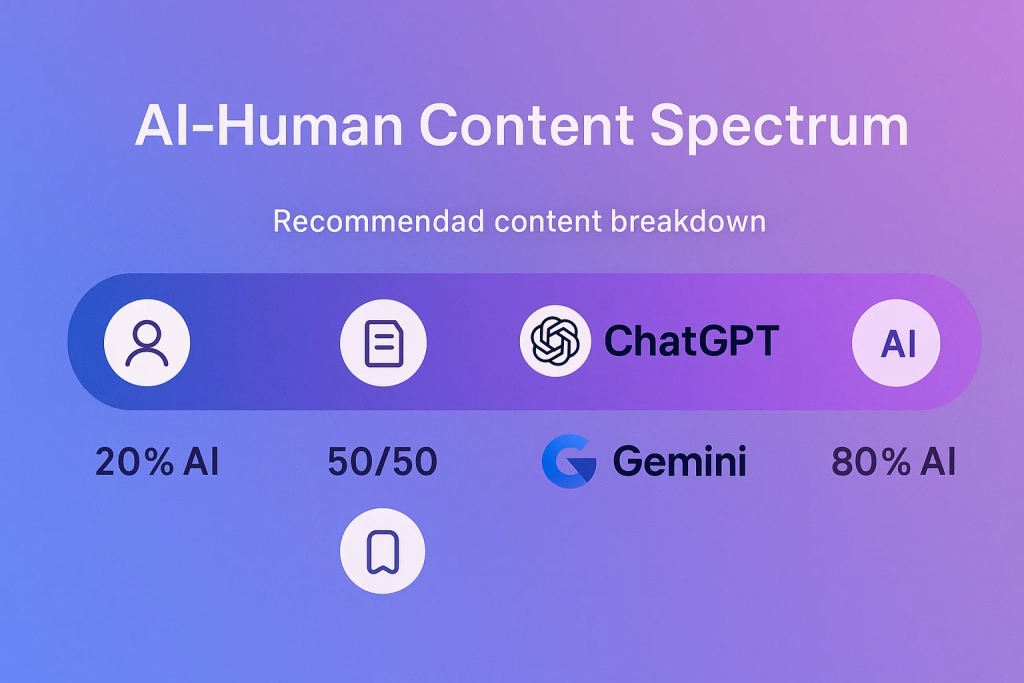
When leveraging AI-powered content creation for digital marketing, I recommend this breakdown:
- AI-dominant (80%+ AI): Product descriptions, basic social posts, data reports
- Human-AI collaboration (50/50): Blog posts, email campaigns, category pages
- Human-dominant (20% AI): Brand storytelling, thought leadership, mission statements
The most effective approach is viewing AI as your creative partner rather than your replacement. The best AI tools for digital marketing content should enhance your creativity, not substitute for it.
AI-Powered Content Creation for Digital Marketing, Digital marketing, AI-Powered Content Creation for Digital Marketing, AI-Powered Content Creation for Digital Marketing
Getting Started: Your 30-Day AI Content Implementation Plan
Ready to dive in? Here’s the streamlined approach I recommend:
- Days 1-3: Audit your current content production bottlenecks
- Days 4-7: Research and select one primary AI content tool (start with Claude, ChatGPT Plus, or Jasper)
- Days 8-14: Create brand voice training materials and prompt templates
- Days 15-21: Run small test projects comparing AI-assisted and traditional content
- Days 22-30: Implement workflows that integrate AI and human creativity
Start small. Focus on one content type. Measure everything. When optimizing AI-generated marketing content, patience pays off.
Conclusion: The Competitive Advantage Is Real
If there’s one thing I want you to take away from this piece, it’s this: AI-powered content creation for digital marketing isn’t just another trend—it’s a fundamental shift in how effective marketing happens.
The marketers who master these tools today will run circles around their competition tomorrow. I’ve seen it happen repeatedly across industries. The productivity gains, personalization capabilities, and creative possibilities are too significant to ignore.
Will AI replace human marketers? Not the good ones. But it will absolutely replace marketers who refuse to adapt.
I’d love to hear about your experiences implementing AI in your content workflows. The learning never stops in this field—and that’s what makes it so exciting.
Frequently Asked Questions (FAQ)
1. Will Google penalize AI-generated content?
Google’s stance is that they evaluate content quality, not production methods. In my experience, well-optimized AI content that provides genuine value performs just as well as human-written content. The key is ensuring it’s factually accurate, genuinely helpful, and properly edited.
2. How much do quality AI content tools typically cost?
For small businesses implementing AI content strategy, expect to spend between $50-200 monthly for quality tools like Jasper, Copy.ai Pro, or ChatGPT Plus. Enterprise solutions with advanced features (like MarketMuse, Persado, or Copysmith Enterprise) can range from $500-5,000+ monthly depending on volume needs and capabilities.
3. What content types work best with AI assistance?
In my experience, structured content like product descriptions, basic blog posts, social media captions, and email subject lines see the best results from AI-powered content creation for digital marketing. More nuanced content like thought leadership pieces typically need more human input.
4. How can I ensure my AI-generated content remains brand-consistent?
Creating comprehensive brand voice guidelines specifically for AI tools is essential. Include examples of ideal content, tone specifications, vocabulary preferences, and taboo topics or phrases. The best AI tools for digital marketing content like Jasper, Writesonic, and Copysmith allow you to save these as reusable templates.
5. What skills should marketers develop to work effectively with AI content tools?
Prompt engineering is the most critical skill—learning how to “speak” to AI to get optimal results. Also valuable are editing efficiency, content strategy, and the ability to identify which content should be AI-assisted versus human-crafted.
6. How do I measure the ROI of implementing AI content creation tools?
Track production time before and after implementation, content volume increases, engagement metrics, conversion rates, and team satisfaction. One client saw their cost-per-piece drop from $350 to $75 while maintaining the same quality level after implementing our AI workflow with Claude and Grammarly Business.
7. Which AI tools are best for multilingual content creation?
For multilingual content, I’ve had great success with DeepL for translations and Claude for adapting messaging to cultural context. For smaller languages, GPT-4 tends to perform better than specialized tools.

