


The Transformative Power of a BBA in Finance: Unlocking Your Professional Future
Back in 2010, I sat in my college counselor’s office with a familiar feeling of dread. “I just don’t know what to choose,” I confessed, the course catalog sprawled across the desk like a roadmap without labels. Marketing with its creative allure pulled me one way, while Finance—with its reputation for stability and high earnings—tugged me in another.
Little did I know that my eventual choice of a BBA in Finance would set me on a career path that’s been both challenging and immensely rewarding. After 12+ years working across investment banking, corporate finance, and now as both a financial advisor and part-time business school instructor, I’ve gained perspective on what a finance degree truly offers—and what it demands.
If you’re standing at that same crossroads today, weighing the options between different business specializations, I’m here to guide you through the reality of pursuing a BBA in Finance and how it compares to other paths like Marketing. Trust me, I’ve been exactly where you are.
What Exactly Is a BBA in Finance? More Than Just Numbers
When people hear I studied finance, they often picture me hunched over spreadsheets all day. Not entirely wrong, but dramatically incomplete. A Bachelor of Business Administration in Finance provides a comprehensive foundation in both general business principles and specialized financial knowledge.
The core BBA Finance degree requirements and curriculum typically include:
- Financial accounting and reporting
- Investment analysis and portfolio management
- Corporate finance and valuation methods
- Financial markets and institutions
- Risk management techniques
- Business statistics and data analysis
- Microeconomics and macroeconomics principles
But here’s what they don’t tell you in the brochures: finance is as much about psychology and human behavior as it is about mathematics. Some of my most valuable classes weren’t the technical ones but those that taught me how to understand market sentiment, investor psychology, and decision-making under uncertainty.
During my junior year, I remember struggling through advanced financial modeling courses, wondering if I’d made a terrible mistake. My roommate in marketing seemed to be having all the fun with creative campaigns while I was drowning in discounted cash flow analyses. God, I hated those all-nighters trying to balance theoretical portfolio models!
But then something clicked during my internship at Morgan Stanley. I realized that all those technical skills were building toward something powerful—the ability to help businesses and individuals make better decisions with their money. And isn’t that what truly matters?
Why Choose a BBA in Finance? The Opportunities Might Surprise You
When considering how to choose between BBA Finance and Marketing (or any other specialization), it’s crucial to look beyond starting salaries and job titles. Let me share what I’ve discovered after more than a decade in the field.
The Versatility Factor: Finance Opens Doors
What’s remarkable about finance is its versatility. Unlike some specialized degrees that lock you into a narrow career path, finance skills are universally valuable. In my career, I’ve worked with:
- Technology startups needing funding strategies
- Family offices managing multi-generational wealth
- Retail banks developing new consumer products
- Manufacturing companies evaluating capital investments
- Healthcare organizations managing operational budgets
Last summer, a former student of mine called to thank me. She had initially worried that her finance degree was too “boring,” but found herself the only team member at her tech startup who could speak both the language of product development AND translate it into financial projections for investors. That versatility made her indispensable.
Entry-Level Jobs After BBA in Finance: Where Can You Start?
People often ask me about realistic entry points into the finance world. Based on my experience placing students and mentoring young professionals, here are some common entry-level positions:
- Financial Analyst – Analyzing company performance, preparing financial models, and supporting decision-making processes.
- Investment Banking Analyst – Supporting deals, conducting market research, and preparing pitch materials (warning: prepare for those 80-hour workweeks I barely survived in my twenties).
- Credit Analyst – Evaluating creditworthiness of loan applicants and making recommendations.
- Treasury Analyst – Managing cash positions, forecasting cash flow needs, and working with banking relationships.
- Wealth Management Associate – Supporting financial advisors in portfolio management and client services.
- Risk Analyst – Identifying and assessing financial risks within organizations.
- Budget Analyst – Helping organizations develop and manage budgets effectively.
The beauty of these roles is that they offer diverse experiences while building a common foundation of financial expertise. I started as a financial analyst at a mid-sized investment firm, and while the learning curve was steep (I still remember crying in my car after a particularly brutal client meeting), that role taught me how to translate complex financial concepts into practical insights.
The Financial Reward: Let's Talk Money
I won’t sugarcoat this: money matters. While pursuing your passion should always be priority number one, the financial reality of different career paths can’t be ignored.
Finance graduates typically enjoy starting salaries 10-15% higher than the average business major. After 5-7 years of experience, this gap often widens significantly for those who specialize in high-demand areas like investment banking, private equity, or specialized corporate finance.
My former classmate who chose marketing certainly loves her work crafting compelling campaigns, but when we met for coffee in 2019, she confessed that the salary differential had become substantial. “I’m creative every day,” she said, “but I’m also constantly fighting for budget while you’re the one controlling it.” That perspective stuck with me.
That said, top-tier marketing roles at major brands can certainly match or exceed many finance positions. This isn’t a clear-cut “finance makes more” situation—it’s about understanding the compensation structures and growth trajectories of different paths.
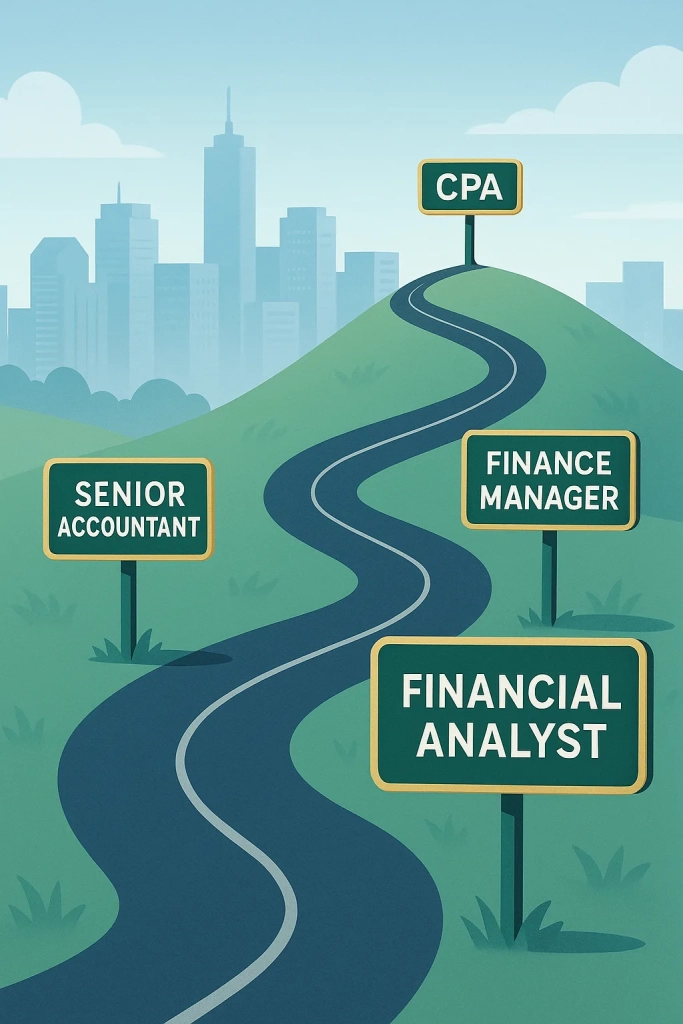
BBA in Finance Career Opportunities: The Long-Term View
As someone who has both hired finance graduates and helped them plan their careers, I’ve observed several distinct career trajectories that a BBA in Finance can launch:
The Corporate Finance Path
This involves moving up the ladder within a company’s finance department:
- Financial Analyst → Senior Financial Analyst → Finance Manager → Finance Director → CFO
This path appeals to those who enjoy being part of a company’s strategic core, working closely with operations and leadership to drive business performance. In my thirties, I spent three years as a Finance Manager at a healthcare company, and while the pace was less frantic than investment banking, the work felt meaningful as I helped shape decisions that directly impacted patient care.
The Investment Path
For those drawn to markets and investment decisions:
- Investment Analyst → Senior Analyst → Portfolio Manager → Investment Director
This path suits analytical minds who enjoy the challenge of market dynamics and investment strategy. One of my former students followed this track and now manages a specialized ESG (Environmental, Social, and Governance) portfolio at a major investment firm—combining her finance skills with her passion for sustainability.
The Advisory Path
For those who enjoy working with clients directly:
- Financial Advisor Associate → Financial Advisor → Senior Advisor → Wealth Management Director
This path combines financial expertise with relationship management, helping individuals and families achieve their financial goals. This is the path I ultimately chose, and I find tremendous satisfaction in helping clients navigate important life decisions.
The Entrepreneurial Path
Many finance graduates eventually leverage their knowledge to:
- Launch fintech startups
- Provide independent consulting services
- Create financial education platforms
- Develop specialized financial products
A colleague from my investment banking days now runs a successful financial literacy platform for young adults—proving that finance skills can be the foundation for creative entrepreneurship.

BBA Finance vs. BBA Marketing: Making the Right Choice
When considering how to choose between BBA Finance and Marketing, it helps to understand the fundamental differences. Let me break this down based on my experience straddling both worlds through various collaborative projects:
| Aspect | BBA in Finance | BBA in Marketing |
|---|---|---|
| Core Focus | Managing and growing financial resources | Building brand equity and driving customer acquisition |
| Key Skills Developed | Analytical thinking, quantitative analysis, risk assessment, problem-solving | Creativity, communication, consumer psychology, digital fluency |
| Work Environment | More structured, often with established processes and metrics | More flexible, with emphasis on innovation and adaptation |
| Typical Work Activities | Financial modeling, data analysis, risk assessment, reporting | Market research, campaign development, content creation, customer analysis |
| Common Personality Fit | Detail-oriented, analytical, methodical, comfortable with numbers | Creative, outgoing, adaptable, strong communicator |
| Career Stability | Generally more stable with consistent demand | More susceptible to economic fluctuations and market trends |
| Earning Potential | Higher starting salaries with steep growth for top performers | Moderate starting salaries with significant growth potential in leadership roles |
| Work-Life Balance | Can be challenging in high-pressure sectors (investment banking) | Generally better, though deadlines can create intense periods |
| Industry Mobility | High transferability across industries | Strong transferability with focus on consumer-facing industries |
| Technological Impact | Increasing automation of basic functions, emphasis on analytical skills | Rapid digital transformation requiring constant adaptation |
This comparison reflects general patterns, but individual experiences can vary widely. When I guest lecture in marketing classes, I’m always impressed by the creativity and strategic thinking on display—qualities that are increasingly valuable in finance as well.
The Evolving Landscape: Finance in the Digital Age
The finance world I entered in 2010 looks remarkably different from today’s landscape. If you’re considering a BBA in Finance career opportunities now, be prepared for:
Fintech Revolution
Financial technology has transformed how we deliver financial services. My first job required building Excel models that would now be automated. Today’s finance graduates need to understand programming languages, data science, and digital platforms alongside traditional financial concepts.
Emphasis on Sustainability
Environmental, Social, and Governance (ESG) considerations are no longer niche—they’re mainstream. Some of the most interesting projects I’ve worked on recently involve sustainable finance initiatives and responsible investing strategies.
Global Interconnectedness
Finance has always been global, but today’s interconnectedness means even entry-level positions often require understanding of international markets and cross-border regulations. My current team includes members from four different countries, all bringing unique perspectives to our work.
What I Wish Someone Had Told Me Before Pursuing Finance
If I could go back and give advice to my younger self (or any student considering this path), I’d share these insights:
- Technical skills get you in the door, but soft skills get you promoted. I spent countless hours mastering financial modeling, only to discover that my ability to explain complex concepts simply to non-finance colleagues was what truly set me apart.
- Find your niche. Finance is vast. The colleagues who advanced most quickly identified specialized areas—whether sector expertise (healthcare finance), technical specialization (derivatives), or process focus (mergers and acquisitions).
- Ethics matter more than you think. In finance, your reputation for integrity is your most valuable asset. I’ve seen brilliant careers derailed by ethical shortcuts that seemed minor at the time.
- Balance is possible but requires boundaries. The finance industry’s reputation for brutal hours isn’t entirely undeserved, but it’s possible to build a sustainable career with the right boundaries. I learned this the hard way after a health scare in my twenties forced me to reassess my work habits.
- Continuous learning is non-negotiable. The financial concepts I learned in school provided a foundation, but the industry evolves constantly. The most successful finance professionals I know are voracious learners who stay ahead of industry trends.
Is a BBA in Finance Right for You?
After years of both practicing finance and teaching it, I’ve noticed patterns among those who thrive in this field:
- You enjoy solving complex problems with tangible outcomes
- You’re comfortable with ambiguity and making decisions with incomplete information
- Numbers tell you stories rather than just representing calculations
- You’re curious about how businesses and markets work
- You can translate technical concepts for non-technical audiences
- You maintain composure under pressure
- You have strong ethical foundations that guide your decision-making
If this sounds like you, a BBA in Finance might be your perfect fit. But remember—passion beats aptitude in the long run. I’ve seen naturally talented students struggle because they chose finance for the wrong reasons, while those with authentic interest overcame initial challenges to build remarkable careers.
Preparing for Success: Beyond the Classroom
If you decide to pursue a BBA in Finance, maximize your experience with these strategies:
Internships Are Non-Negotiable
Every single student I’ve mentored who secured a competitive position after graduation had at least two internships. These experiences provide context for classroom learning and help you determine which financial sectors align with your interests.
Build Technical Proficiency
Beyond your coursework, become proficient in:
- Advanced Excel modeling
- Financial databases like Bloomberg or FactSet
- Basic programming (Python or R)
- Data visualization tools
Develop Your Network Early
The finance industry still operates heavily on relationships. Join finance clubs, attend industry events, and connect with alumni from your program. Some of my most significant career opportunities came through connections I made as an undergraduate.
Pursue Relevant Certifications
While not required for entry-level positions, certifications can differentiate you in competitive markets:
- Financial Modeling Certification
- Bloomberg Market Concepts
- Securities Industry Essentials Exam
- Entry-level CFA exams (for investment-focused careers)
Final Thoughts: Making Your Decision
As I wrap up my thoughts on BBA in Finance career opportunities, remember that your educational path is just one factor in your professional journey. I’ve seen marketing majors excel in finance roles and finance graduates thrive in creative industries.
What matters most is alignment between your personal strengths, interests, and chosen field. Finance has given me analytical tools, business understanding, and economic perspective that have proven valuable in every aspect of my life—from career decisions to personal investments to understanding the world around me.
If you’re drawn to the challenge of translating numbers into meaningful insights, of helping businesses and individuals make sound financial decisions, and of continuing to learn in a dynamic field, then a BBA in Finance might be just the foundation you need.
Whatever you choose, approach it with curiosity, commitment, and authenticity. Those qualities will serve you well regardless of your specialization.
I’d love to hear from readers about their experiences choosing between business specializations or questions about finance careers. Drop a comment below or reach out directly—after all, the best financial advice comes from conversation, not calculation.
Frequently Asked Questions About BBA in Finance
1. Is a BBA in Finance hard for students who aren’t naturally “math people”?
While finance involves quantitative analysis, it’s more about logical thinking than advanced mathematics. Most calculations are handled by software—your value comes from interpreting results and making recommendations. I’ve seen many students who considered themselves “average” in math excel in finance through dedication and interest in the underlying concepts.
2. What makes someone choose Finance over Accounting?
Though related, these fields have different focuses. Accounting looks backward at recording and reporting financial transactions, while finance looks forward at planning and strategy. I chose finance because I preferred making future-oriented decisions rather than documenting past activities. Finance also typically offers more diverse career paths and often higher compensation potential.
3. How important are graduate degrees in finance?
It depends entirely on your career goals. For many corporate finance roles, a BBA with strong experience is sufficient. For investment banking, private equity, or highly specialized roles, an MBA or Master’s in Finance can be valuable. However, I’ve seen many successful professionals achieve senior positions with just undergraduate degrees and exceptional performance.
4. Can I switch to finance with a non-finance undergraduate degree?
Absolutely! Many of my most successful colleagues came from non-finance backgrounds. They typically needed to demonstrate analytical ability, complete relevant certifications, and possibly pursue internships or entry-level positions to transition. The diverse perspective from their original field often becomes a unique strength.
5. How is artificial intelligence changing finance careers?
AI is automating routine analytical tasks but simultaneously creating new opportunities in areas requiring human judgment, creativity, and ethical considerations. The finance professionals who will thrive are those who can work alongside AI tools, focusing on high-level strategy and relationship management while leveraging technology for efficiency.
6. Is it possible to have work-life balance in finance?
Yes, but it varies dramatically by sector. Investment banking and private equity are notorious for demanding hours, while corporate finance, financial planning, and many fintech roles offer much more sustainable schedules. I’ve deliberately chosen paths that allow me to maintain balance while still working in finance—it’s about finding the right fit for your priorities.

