


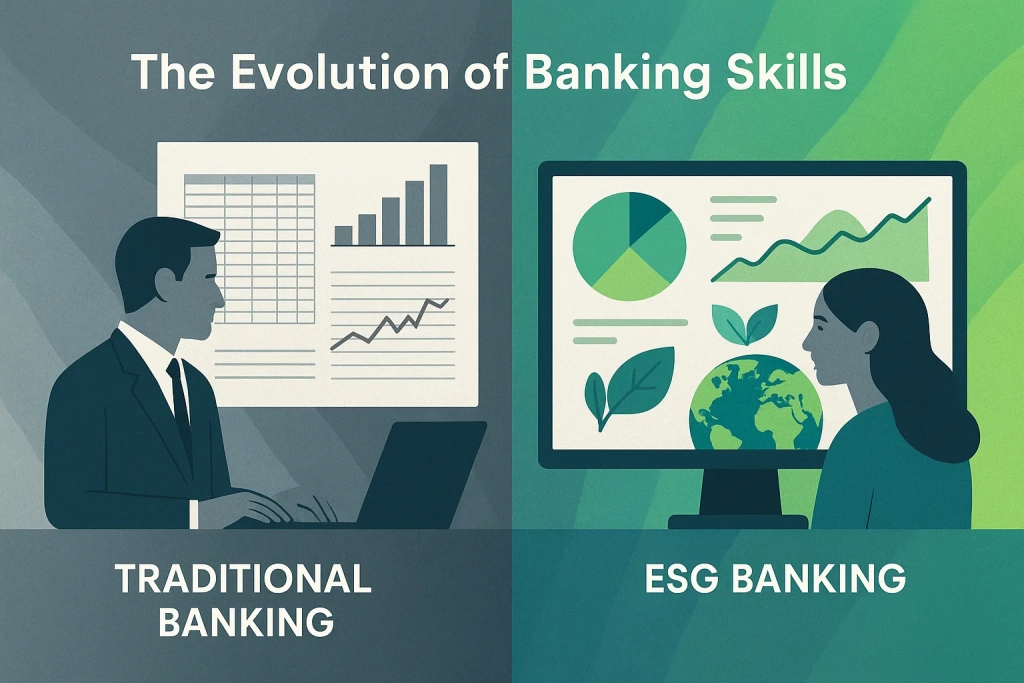
Remember when Excel mastery was the golden ticket to a banking career? Those days are gone. After 15 years in the trenches of the banking world, I’ve witnessed a seismic shift in what makes finance professionals employable. And trust me, ESG integration in banking industry expertise has moved from a “nice-to-have” to an absolute necessity.
When I graduated with my finance degree back in 2008 (yes, terrible timing with the financial crisis in full swing), nobody mentioned sustainability in our curriculum. Fast forward to today, and I spend most of my consulting hours helping banks transform their operations around environmental, social, and governance principles. The change has been breathtaking—and many institutions are scrambling to catch up.
Why Has ESG Integration in Banking Industry Become Non-Negotiable?
Let me tell you about my wake-up call. In 2019, I was leading a deal team at Morgan Stanley when a major pension fund client pulled out of a financing arrangement at the eleventh hour. The reason? Our ESG assessment of the project was insufficient. God, I hate when that happens. Especially after weeks of due diligence and countless late nights preparing the pitch.
That experience cost our team millions in potential revenue—but it taught me something invaluable. ESG integration in banking industry practices weren’t just a marketing gimmick; they represented a fundamental shift in how capital flows would be directed for decades to come.
Today’s finance graduates aren’t just competing for jobs against peers with better GPAs. They’re up against candidates who understand:
- How climate risk impacts loan portfolio performance
- Why social impact considerations affect investment returns
- How governance failures create material financial risks
The banking industry has realized—sometimes the hard way—that these factors materially impact their bottom line. And that’s why sustainable finance skills for graduates have become absolutely essential.
The Hard Numbers: ESG Banking Is Big Business
For those who think this is just another industry fad, consider this: According to Bloomberg Intelligence, global ESG assets are on track to exceed $50 trillion by 2025, representing more than a third of projected total assets under management worldwide.
I’ve watched firsthand as ESG integration in banking industry practices have transformed from specialized niche to mainstream requirement. Last summer, I consulted with three of the largest banks in North America, all implementing comprehensive ESG frameworks across their lending, investment, and advisory businesses.
The transformation isn’t happening because bankers suddenly developed environmental consciences (though some truly have). It’s happening because:
- Regulatory pressure is intensifying
- Client demand is skyrocketing
- Risk management necessitates it
- Competitive advantage requires it
In my twenties, I watched banks compete on interest rates and service fees. Now they compete on their commitment to financing the transition to a low-carbon economy. Times change. Markets evolve. And so must the skills of those entering the profession.
What "ESG Integration in Banking Industry" Actually Means in Practice
When I talk about ESG integration in banking industry practices, what exactly am I referring to? It’s not just about screening out “sin stocks” or writing flashy sustainability reports.
In my consulting role, I work with banks implementing ESG considerations across every division:
Retail Banking: Going Beyond Green Marketing
Retail banks aren’t just offering “eco-friendly” credit cards anymore. They’re fundamentally rethinking product design.
One of my clients (a regional bank I can’t name, but you’d recognize) recently launched a mortgage product that offers preferential rates for energy-efficient homes. The analytics team had to develop entirely new risk models incorporating energy efficiency data—something nobody on staff had experience with until they hired a recent graduate with sustainability credentials.
ESG banking career requirements now include understanding how environmental factors influence consumer lending risk. Traditional credit models simply don’t capture these variables effectively.
Investment Banking: Transforming Deal Flow
Remember when investment bankers evaluated deals purely on financial metrics? Those days are gone.
I spent eight years in investment banking before transitioning to ESG consulting, and the change in due diligence procedures is remarkable. Today’s analysts need to conduct climate scenario analyses, evaluate supply chain human rights risks, and assess board diversity impacts alongside traditional financial models.
A friend who leads recruitment at a bulge-bracket bank told me they now specifically test for sustainable finance skills for graduates during interviews. Can you evaluate a company’s transition plan to net-zero emissions? Do you understand carbon markets? Can you spot greenwashing in sustainability reports?
If you can’t, you might not make the cut—regardless of how well you can build a DCF model.
How Finance Graduates Can Develop ESG Banking Expertise
So what should today’s finance graduates do to develop the ESG integration in banking industry skills employers demand? Based on my experience hiring and training banking professionals, here’s what I recommend:
Understand the Regulatory Landscape
Banking is always heavily regulated, but ESG regulations are evolving at warp speed. Trust me, I learned this the hard way when a deal I was working on got caught in changing disclosure requirements.
Finance graduates need to familiarize themselves with frameworks like:
- The Task Force on Climate-related Financial Disclosures (TCFD)
- The EU Sustainable Finance Disclosure Regulation (SFDR)
- The Network for Greening the Financial System (NGFS) scenarios
These aren’t obscure technical standards—they’re reshaping how capital markets function. And understanding them gives you a massive advantage in job interviews.
Develop Specialized Data Analysis Skills
Traditional financial analysis focused on income statements and balance sheets. Today’s ESG banking career requirements include analyzing datasets that traditional finance programs don’t teach.
Can you interpret carbon footprint data? Do you understand social impact metrics? Can you evaluate governance scores?
Back in 2019, I hired an analyst straight out of university who had taken specialized courses in ESG data analysis. Despite having less traditional finance experience than other candidates, she quickly became indispensable because she could translate sustainability data into financial implications—a skill nobody else on the team had mastered.
Gain Certification and Specialized Training
When I’m reviewing resumes for ESG banking roles, I look for candidates who’ve gone beyond their standard finance curriculum. Certifications that demonstrate sustainable finance skills for graduates include:
- CFA ESG Investing Certificate
- Sustainability Accounting Standards Board (SASB) FSA Credential
- Green and Sustainable Finance Certificate (Chartered Banker)
These credentials signal serious commitment to developing expertise in ESG integration in banking industry practices. And they provide a structured way to learn the practical skills you’ll need.
The Reality Check: ESG Banking Isn't Always Straightforward
I’d be doing you a disservice if I painted ESG integration in banking industry as a smooth, clear-cut process. It’s not. (Understatement of the century.)
One of my banking clients spent millions implementing an ESG loan evaluation framework, only to discover their data collection methodology was fundamentally flawed. Another struggled with competing internal priorities when their ESG commitments conflicted with short-term profit objectives.
Green banking professional development often involves navigating these gray areas. You’ll need to understand not just the technical aspects of ESG analysis, but also change management and organizational psychology. How do you convince a 30-year veteran loan officer that climate risk matters to their portfolio?
Sometimes it feels like trying to turn an oil tanker with a paddleboard. But that’s precisely why banks are desperate for graduates who understand both traditional finance and ESG principles.
How ESG Banking Skills Will Shape Your Career Trajectory
Let me share something from personal experience: specializing in ESG integration in banking industry accelerated my career in ways I never anticipated.
When I pivoted from traditional investment banking to focus on sustainable finance in 2017, some colleagues thought I was sidelining myself. “That’s a niche specialty,” one managing director told me. “You’re limiting your options.”
He couldn’t have been more wrong.
Within two years, I was consulting for C-suite executives at banks three times the size of my former employer. Why? Because I developed expertise in something they desperately needed but didn’t fully understand.
Today’s finance graduates have that same opportunity. ESG banking career requirements are evolving so rapidly that those who develop relevant skills now will find themselves in increasingly strategic roles as their careers progress.
The Skills Matrix: What ESG-Focused Banks Actually Look For
Based on my experience developing hiring criteria for sustainable finance roles, here’s what banks are actually looking for when they talk about ESG integration in banking industry skills:
Technical Knowledge
- Understanding of climate science fundamentals
- Familiarity with social impact measurement
- Governance assessment methodologies
- Sustainable accounting principles
Analytical Capabilities
- ESG data interpretation
- Scenario analysis under different climate pathways
- Integration of sustainability metrics into financial models
- Risk assessment across environmental and social factors
Soft Skills
- Ability to communicate ESG concepts to non-specialists
- Cross-functional collaboration
- Change management
- Stakeholder engagement
The most successful candidates I’ve hired combine traditional financial acumen with these sustainable finance skills for graduates. They can speak both languages—finance and sustainability—and translate between them effectively.
ESG Integration: Not Just for Specialist Roles
A common misconception I encounter is that ESG integration in banking industry only matters for specialized sustainability teams. Nothing could be further from the truth.
In my consulting practice, I’ve watched as ESG considerations have permeated every banking function:
- Credit analysts now evaluate climate transition risks alongside traditional credit factors
- Relationship managers must discuss sustainability strategies with corporate clients
- Product developers design offerings with ESG considerations built in
- Risk managers incorporate climate scenarios into stress testing
- Compliance officers track evolving ESG regulations
This means that green banking professional development isn’t optional regardless of which banking career path you pursue. Even if you never have “sustainability” in your job title, you’ll need to understand how ESG factors impact your specific function.
The Competitive Edge: Standing Out With ESG Expertise
So how can today’s finance graduates use ESG integration in banking industry knowledge to stand out in a competitive job market?
Based on my experience interviewing hundreds of candidates for banking roles, here’s what works:
- Demonstrate practical application: Don’t just say you understand ESG principles—show how you’ve applied them. Even university projects analyzing a company’s sustainability performance can demonstrate your capability.
- Develop a point of view: The best candidates don’t just know ESG frameworks—they have thoughtful perspectives on them. What works? What doesn’t? Where is regulation heading?
- Show commercial awareness: Banks aren’t charities. They implement ESG practices because they believe it’s good business. Candidates who understand the commercial implications of sustainability have a massive advantage.
When I was hiring for my team last year, we had two finalists with nearly identical technical qualifications. The one who got the job? The candidate who could articulate how ESG integration in banking industry would create competitive advantages for our client. She understood both the moral and commercial cases for sustainability.
Where Banking and ESG Integration Are Headed Next
If I were graduating today with a finance degree, here’s where I’d focus my green banking professional development efforts based on where I see the industry heading:
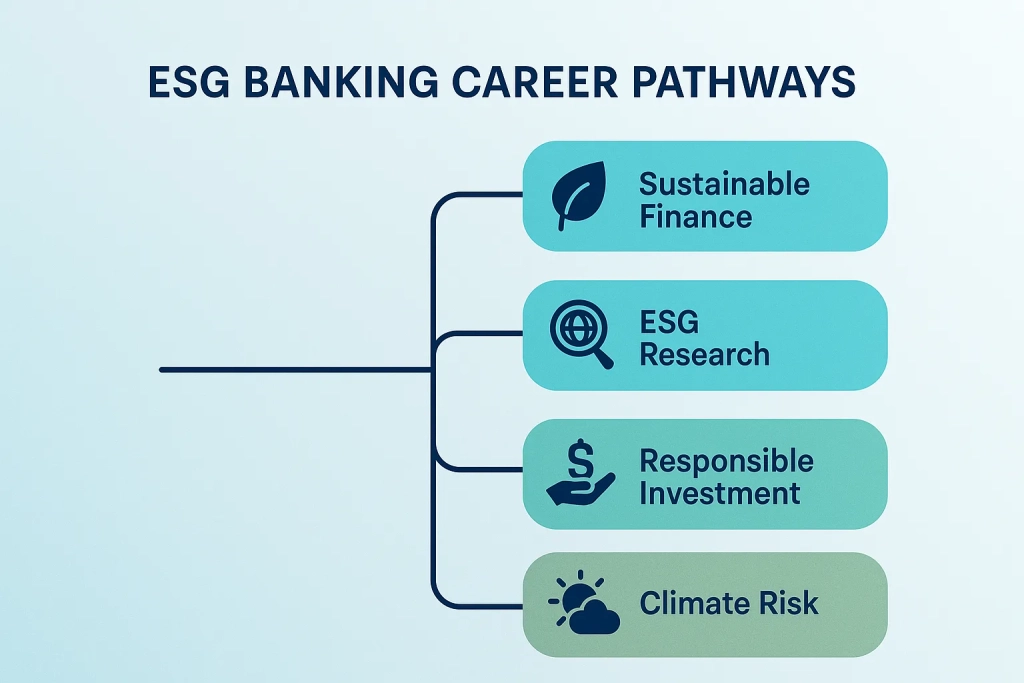
Climate Risk Modeling
Banks are scrambling to develop sophisticated climate risk models to understand their exposure across different warming scenarios. Those who can build and interpret these models will be invaluable.
Transition Finance
Helping carbon-intensive industries transition to lower-emission alternatives represents trillions in financing opportunities. Understanding the technical aspects of transition pathways in different sectors will be crucial.
Biodiversity Finance
While climate has dominated the environmental conversation, biodiversity risk is emerging as the next frontier in ESG integration in banking industry. Early expertise in this area could be career-defining.
Social Impact Measurement
The “S” in ESG has traditionally been the most difficult to quantify. Banks need professionals who can develop rigorous approaches to measuring social impact and translating it to financial materiality.
The integration of these elements into banking isn’t happening in isolation. They’re increasingly interconnected, which is why broad but deep understanding of ESG integration in banking industry practices is so valuable.
Conclusion: The Unavoidable Future of Banking
When I started in banking, ESG was barely mentioned. Today, it shapes virtually every significant strategic decision banks make. This trajectory isn’t reversing.
For today’s finance graduates, developing sustainable finance skills for graduates isn’t optional—it’s essential for long-term career viability. The good news? It’s still early enough that developing expertise now puts you ahead of the curve.
I’ve watched too many experienced bankers struggle to adapt to this new reality. They built careers on financial models that didn’t account for climate risk, biodiversity loss, or social impact. Now they’re playing catch-up.
You don’t have to be one of them. By embracing ESG integration in banking industry as a core component of your professional development, you position yourself not just for your first job, but for long-term success in an industry being fundamentally reshaped by sustainability imperatives.
The future of banking is sustainable. Make sure your career is too.
Frequently Asked Questions
1. What exactly does ESG integration in banking industry mean in practical terms?
ESG integration means incorporating environmental, social, and governance factors into all banking activities—from risk assessment and lending decisions to product development and investment strategies. It’s not just about having a sustainability team; it’s about embedding these considerations across all banking functions.
2. Do I need special certifications to demonstrate sustainable finance skills for graduates?
While not strictly required, certifications like the CFA ESG Investing Certificate or the SASB FSA Credential can significantly strengthen your resume. They demonstrate commitment and provide structured learning in an evolving field.
3. Is ESG banking just a temporary trend?
Absolutely not. ESG integration represents a fundamental shift in how financial risks and opportunities are evaluated. Regulatory pressure, client demand, and the material financial impacts of climate change and social factors ensure this is a permanent transformation of the industry.
4. Which banking roles are most impacted by the rise of ESG considerations?
While sustainability specialists are in high demand, virtually all banking roles now require some level of ESG understanding. Risk managers, credit analysts, investment bankers, and relationship managers all need to understand how sustainability factors impact their specific functions.
5. How can I develop ESG banking career requirements if my finance program doesn’t offer specialized courses?
Look for online courses, professional certifications, and self-study resources. Participate in sustainability-focused case competitions, join relevant professional networks, and consider internships with organizations focused on sustainable finance.
6. Will focusing on green banking professional development limit my career options?
On the contrary, developing ESG expertise expands your career options. You maintain your core finance skills while adding specialized knowledge that is increasingly valued across all banking functions and institutions.

