


I remember sitting in a stuffy conference room back in 2019, listening to our digital strategy director drone on about “blockchain disruption” while most of my banking colleagues scrolled through emails. Fast forward to today, and I’ve spent the last three years helping traditional financial institutions navigate the wild waters of decentralized finance. Trust me, the landscape has changed dramatically.
If you’re a banking student trying to make sense of decentralized finance for banking students in today’s hyped-up crypto world, you’re in the right place. I’ve been there – confused by the jargon, skeptical of the promises, and overwhelmed by the sheer pace of innovation. But I’ve also seen firsthand how understanding these technologies can transform your career trajectory in finance.
What the Heck is DeFi and Why Should Banking Students Care?
Let’s get something straight – decentralized finance isn’t just about Bitcoin or getting rich quick. God, I hate when people reduce it to that. DeFi represents a fundamental shift in how financial services can be structured, delivered, and accessed.
At its core, decentralized finance for banking students represents the movement to recreate traditional financial systems (lending, borrowing, trading) without centralized intermediaries like banks. Instead, these functions operate through smart contracts on blockchain networks – primarily Ethereum, but increasingly on other chains too.
Why should you care as a banking student? Because whether traditional banks embrace, resist, or transform alongside DeFi, your career will be impacted. My former intern from Goldman Sachs just landed a dream job specifically because she understood both traditional finance AND decentralized protocols. This isn’t theoretical anymore.
How Traditional Banking Functions Compare to DeFi Alternatives
When I was teaching financial markets at NYU last summer, I developed this comparison chart that really helped my students understand the parallel universe of DeFi:
| Traditional Banking Function | DeFi Alternative | Key Differences |
|---|---|---|
| Savings Accounts | Lending Protocols (Aave, Compound) | No minimum deposits, no approval process, algorithmically determined interest rates |
| Investment Banking | Decentralized Exchanges (Uniswap, Curve) | No order books, automated market making, liquidity pools instead of market makers |
| Loans | Lending Protocols | Collateral-based (often overcollateralized), no credit checks, instant approval |
| Asset Management | DeFi Index Protocols (TokenSets, DeFi Pulse Index) | Automated rebalancing, transparent holdings, programmable investment strategies |
| Insurance | DeFi Insurance (Nexus Mutual, Unslashed) | Parametric insurance models, community-driven risk assessment |
The architectural differences create entirely new opportunities and risks. I remember my first DeFi transaction in 2020 – I was terrified of making a mistake with no bank customer service to call. But after that initial fear, I was amazed by the efficiency of removing intermediaries from financial transactions.
Understanding Smart Contract Fundamentals Without Going Too Deep
You don’t need to become a developer to understand decentralized finance for banking students. But grasping some basics about smart contracts will save you from looking like a complete newbie in interviews and discussions.
Think of smart contracts like digital vending machines (my favorite analogy when explaining this to my skeptical parents). You put in your inputs (crypto assets), the pre-programmed code executes automatically when conditions are met, and out comes your desired result (a loan, interest, a trade).
What makes them revolutionary for banking:
- They’re immutable (once deployed, they operate exactly as programmed)
- They’re transparent (anyone can view the code)
- They’re permissionless (no approval needed to use them)
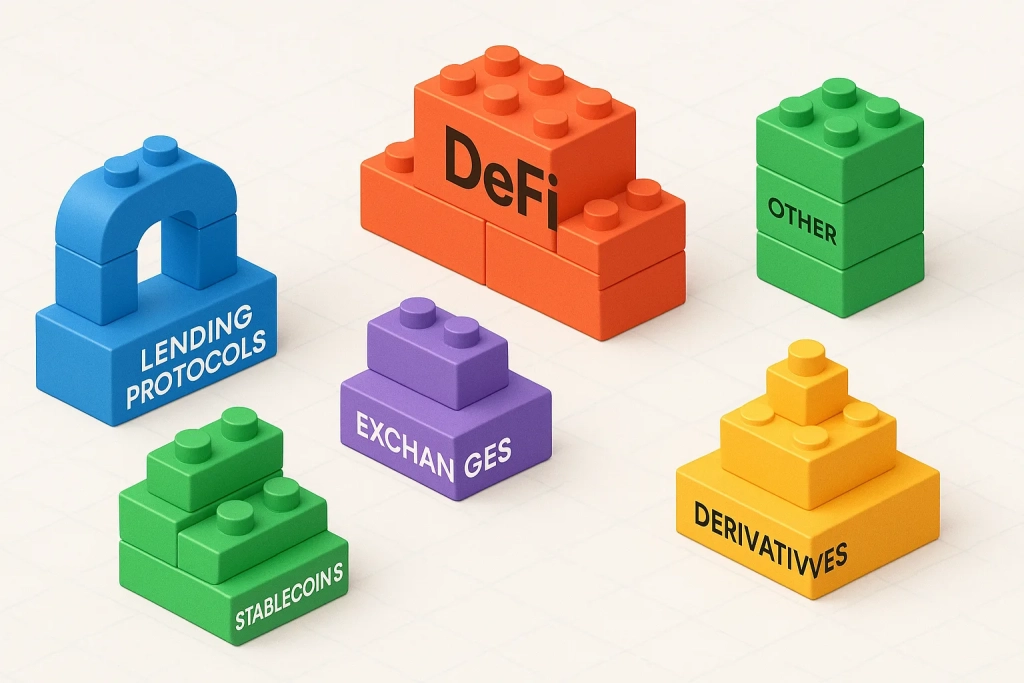
- They’re composable (can be combined like financial Lego blocks)
That last point – composability – is what really blew my mind when I first started consulting with banks about DeFi integration. The ability to stack different financial services together programmatically creates efficiencies that traditional banking systems simply cannot match.
How Can Banking Students Prepare for a DeFi-Influenced Career?
When I mentor banking students interested in decentralized finance for banking students, I recommend a three-pronged approach:
1. Understand the Technology Fundamentals (Without Becoming a Developer)
You don’t need to code (though it helps), but you should understand:
- Basic blockchain concepts
- Different consensus mechanisms (PoW vs PoS)
- The distinction between different types of tokens (fungible, non-fungible, governance)
- How public/private keys work for transaction signing
- The concept of gas fees and network congestion
I struggled with this initially – my background was in financial analysis, not computer science. What helped me? Finding real-world analogies for each concept. For example, I think of private keys like the combination to a digital safe – if you lose it, there’s no “forgot password” button.
2. Gain Hands-On Experience With DeFi Protocols
Nothing replaces actual experience. In my DeFi workshops for banking professionals, I’ve seen countless “aha moments” when people make their first swap on a decentralized exchange or deposit into a lending protocol.
Start small and with test networks if you’re nervous. My colleague wasted $300 in gas fees last year because she didn’t understand how Ethereum transaction prioritization works. Learn from her mistake!
Some beginner-friendly ways to gain experience:
3. Connect DeFi Concepts to Traditional Finance Knowledge
This is where banking students have a massive advantage. Understanding concepts like yield curves, risk management, and capital efficiency gives you context that many crypto-natives lack.
In my banking career, I underwrote hundreds of loans. This experience gave me immediate insight into the strengths and weaknesses of algorithmic underwriting in DeFi lending protocols. Your traditional finance education isn’t obsolete – it’s a competitive advantage when applied to decentralized innovations.
The Most Promising DeFi Applications for Traditional Banking Integration
If you’re wondering which aspects of decentralized finance for banking students will most likely intersect with traditional banking careers, here’s my assessment based on projects I’ve consulted on:
Cross-Border Payments and Remittances
Traditional international transfers are expensive, slow, and opaque. I’ve seen firsthand how DeFi protocols can reduce settlement times from days to minutes and slash costs dramatically. Several banks I’ve worked with are already experimenting with stablecoin corridors for specific remittance routes.
Asset Tokenization and Fractional Ownership
This is perhaps the most promising intersection of traditional banking and DeFi. By tokenizing real-world assets (real estate, art, private equity), traditional financial institutions can increase liquidity and accessibility while maintaining regulatory compliance.
Last year, I helped a regional bank develop a tokenized real estate platform that allowed their clients to buy fractional shares of commercial properties – something that would have been prohibitively expensive to structure traditionally.
Automated Treasury Management
Corporate treasury operations are ripe for DeFi innovation. I’ve worked with companies using DeFi protocols to optimize cash management by programmatically allocating funds between yield-generating opportunities based on risk parameters.
The most sophisticated treasury teams I consult with now use a hybrid approach – keeping their core treasury functions within traditional banking while experimenting with DeFi allocations for enhanced yield.
Navigating the Regulatory Landscape of DeFi as a Banking Professional
Here’s where things get tricky. The regulatory environment around decentralized finance for banking students remains fluid, and this creates both challenges and opportunities for banking professionals.
In my previous role at a fintech regulatory consulting firm, we helped dozens of banks develop policies for engaging with DeFi. The key is understanding where regulatory boundaries exist and how they’re evolving.
Some principles to consider:
- Securities laws still apply to many token offerings
- AML/KYC requirements don’t disappear just because a protocol is “decentralized”
- Banking licenses and money transmitter regulations remain relevant for on/off ramps
- Tax implications vary dramatically by jurisdiction
I once attended a banking conference where a senior executive proudly announced their new “fully compliant DeFi platform.” Within two minutes of his presentation, I spotted at least three regulatory issues they hadn’t addressed. Don’t be that person!
Common Misconceptions About DeFi That Banking Students Should Avoid
Through my teaching and consulting work, I’ve encountered some persistent myths about decentralized finance for banking students that need debunking:
Misconception 1: “DeFi Will Completely Replace Traditional Banking”
Reality: More likely, we’ll see a hybrid model emerge. Some functions will migrate to DeFi platforms, while others (particularly those requiring human judgment or regulatory oversight) will remain within traditional structures.
Misconception 2: “DeFi Is Only About Speculation”
Reality: While speculation drives many headlines, the most substantial innovations are in market infrastructure, capital efficiency, and financial inclusion. My work with microfinance institutions in Southeast Asia showed me how DeFi protocols can serve populations that traditional banking has ignored.
Misconception 3: “Smart Contracts Are Infallible”
Reality: Smart contracts are only as good as their code and the assumptions built into them. I’ve seen catastrophic failures resulting from simple coding errors or unanticipated edge cases. Critical thinking still matters enormously!
Misconception 4: “DeFi Exists Outside Regulatory Reach”
Reality: Regulators are rapidly developing frameworks to address DeFi activities. The truly borderless, anonymous DeFi that early advocates imagined is increasingly giving way to regulated, KYC-compliant platforms that interface with traditional finance.
How Banking Students Can Build Their DeFi Knowledge Strategically
When I was transitioning from traditional banking to the DeFi space in 2020, I felt completely overwhelmed. There were new terms, concepts, and platforms emerging daily. Through trial and error, I developed a learning strategy that might help you:
- Build foundational knowledge first: Before diving into specific protocols, understand blockchain fundamentals and crypto economics.
- Follow thought leaders: Identify credible voices in both traditional finance and DeFi who can contextualize developments.
- Join communities: Some of my best insights came from Discord servers and DAOs where practitioners discuss real challenges.
- Learn to separate signal from noise: The DeFi space is filled with hype. Develop critical thinking skills to identify substantive innovations versus marketing fluff.
- Understand technical limitations: Every DeFi protocol faces tradeoffs between security, decentralization, and scalability. Learning these constraints helps you assess projects realistically.
My personal breakthrough came when I stopped trying to learn everything and instead focused on one vertical (DeFi lending) deeply before expanding outward. This approach might work for you too.
Practical Steps to Add DeFi Expertise to Your Banking Career Path
If you’re convinced that understanding decentralized finance for banking students is valuable but unsure how to proceed, here are specific steps you can take:
For Banking Students Still in School:
- Take elective courses in blockchain technology if available
- Start a DeFi or blockchain club if one doesn’t exist
- Pursue research projects connecting traditional finance and DeFi concepts
- Attend hackathons (even if you’re not technical, teams need finance expertise)
- Seek internships with crypto-friendly financial institutions
When I was teaching finance, my most successful students were those who integrated DeFi concepts into their traditional coursework – like the student who analyzed Aave’s liquidity risk models for her risk management final project.
For Early Career Banking Professionals:
- Join internal working groups on blockchain or digital assets
- Volunteer for projects that touch on DeFi, crypto, or digital innovation
- Build a personal portfolio of DeFi experience (even with small amounts)
- Network with professionals straddling traditional and decentralized finance
- Consider certification programs in blockchain or DeFi fundamentals
A former colleague at JP Morgan dedicated just two hours weekly to a digital assets working group. Three years later, she’s leading their DeFi integration team – all because she raised her hand when others were skeptical.
The Future of Banking Education in a DeFi-Influenced World
Having taught finance at both graduate and undergraduate levels, I’ve seen how slowly academic curricula adapt to industry innovations. This creates both challenges and opportunities for proactive banking students.
The truth is, most banking education programs are only beginning to incorporate decentralized finance for banking students into their curricula. This creates an opportunity for self-directed learners to develop expertise ahead of the curve.
In five years, I believe DeFi concepts will be integrated throughout banking education – not as separate courses, but as components of traditional subjects:
- Corporate finance will include tokenization models
- Investment classes will cover decentralized exchanges alongside traditional markets
- Risk management will address smart contract auditing and protocol security
- Banking operations will include DeFi efficiency comparisons
Until then, supplement your formal education with self-directed learning. Your future employers will value this initiative tremendously.

Conclusion: Balancing Skepticism and Opportunity in DeFi
After three years immersed in both traditional banking and decentralized finance, I’ve learned that the most valuable perspective combines healthy skepticism with openness to innovation.
Decentralized finance for banking students represents a significant evolution in how financial services can be structured and delivered. Some aspects will fail spectacularly (I’ve lost money testing platforms that later collapsed). Others will transform banking foundations in ways we’re just beginning to appreciate.
As a banking student or early-career professional, your advantage lies in understanding both worlds. You don’t need to become a DeFi maximalist or a banking traditionalist – the most valuable perspective acknowledges the strengths and limitations of each approach.
I started my journey doubting whether DeFi had practical applications beyond speculation. Today, I’m helping major financial institutions integrate these innovations into their strategic roadmaps. Your journey might follow a different path, but I encourage you to approach decentralized finance with curiosity, critical thinking, and the solid foundation your banking education provides.
The future belongs to finance professionals who can navigate both centralized and decentralized systems with equal confidence. Why not be one of them?
Frequently Asked Questions About DeFi for Banking Students
1. Do I need to learn coding to understand decentralized finance for banking students?
No, you don’t need to become a developer, though basic technical literacy helps tremendously. Focus on understanding the business logic, economic models, and risk factors of various protocols. That said, familiarity with programming concepts will give you an edge in analyzing smart contract risks.
2. How can I experience DeFi without risking significant funds?
Start with test networks (like Ethereum’s Goerli) that use free test tokens to simulate transactions. When you’re ready for mainnet, begin with small amounts you can afford to lose. Consider it an educational expense rather than an investment.
3. Will traditional banking jobs disappear because of DeFi?
Some roles will transform rather than disappear entirely. Banking functions requiring relationship management, complex underwriting, or regulatory oversight will likely evolve rather than vanish. However, roles focused purely on transaction processing or settlement may face disruption.
4. How do I explain the value of DeFi knowledge to traditional banking employers?
Frame it as complementary expertise that helps you identify both opportunities and risks. Many banks are exploring digital asset strategies but lack employees who understand both traditional finance and decentralized innovations. Position yourself as a bridge between these worlds.
5. Is DeFi just another fintech trend that will fade away?
While some specific projects will certainly fail, the core innovations of decentralized finance – programmable money, automated market making, tokenization, and composable financial services – represent genuine innovations with staying power. The form may evolve, but the fundamental concepts are transforming finance.
6. How do I stay updated on DeFi developments relevant to banking careers?
Combine traditional financial news sources with crypto-native publications. Follow thought leaders who bridge both worlds, participate in relevant Discord communities, and consider joining professional organizations focusing on blockchain in financial services.

